AQS H9500 Module Bruker Biospin Mri
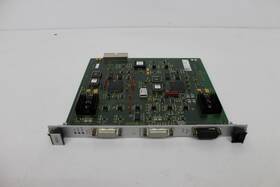
( Brand: Aqs ), ( Manufacturer Part Number: H9500 ), ( Type: Lab., Medical, Dental Vet )
Review AQS Acb x Module Bruker Biospin Mri
The **AQS H9500 ACB-X Module** from Bruker BioSpin represents a cutting-edge, high-performance solution designed for advanced nuclear magnetic resonance (NMR) spectroscopy and magnetic resonance imaging (MRI) applications, particularly within ultra-high-field research environments. Engineered to deliver exceptional sensitivity, stability, and precision, this module is tailored for use in state-of-the-art NMR spectrometers and MRI systems operating at field strengths up to 900 MHz (21.1 Tesla), making it an indispensable component for pushing the boundaries of molecular and structural biology, materials science, and biomedical research. The ACB-X module integrates a **high-efficiency, actively shielded, and broadband RF (radiofrequency) coil architecture**, ensuring optimal signal transmission and reception across a wide range of nuclei, including but not limited to 1H, 13C, 15N, 31P, and 19F. Its **adaptive current bias (ACB) technology** dynamically compensates for magnetic field inhomogeneities and thermal fluctuations, thereby enhancing spectral resolution and reducing artifacts in complex samples. The H9500 module is built upon Bruker s proprietary **HyPerProbe** technology, which combines high-Q (quality factor) superconducting components with advanced signal processing algorithms to maximize sensitivity and minimize noise, even in challenging experimental conditions. This module is particularly well-suited for applications requiring ultra-high resolution, such as protein structure determination, metabolomics, solid-state NMR, and in vivo MRI, where the ability to detect weak signals and resolve fine spectral details is critical. Additionally, its **modular and scalable design** allows for seamless integration into existing Bruker NMR platforms, enabling researchers to upgrade their systems without extensive reconfiguration. With robust thermal management, low-loss materials, and a compact yet durable construction, the AQS H9500 ACB-X module exemplifies Bruker BioSpin s commitment to innovation and reliability, empowering scientists to achieve breakthroughs in fields where precision and performance are non-negotiable.
### **Pros and Cons of buying a Bruker BioSpin AQS H9500 ACB-X NMR Magnet Module**
#### **Pros**
1. **High Magnetic Field Strength (950 MHz for H)**
- The H9500 magnet operates at 9.5 Tesla, providing exceptional resolution and sensitivity for high-field NMR spectroscopy. This is ideal for advanced structural studies, including proteins, nucleic acids, and complex biomolecules.
2. **ACB-X (Advanced Cryogenic Bearer) Technology**
- Bruker s ACB-X cryogenic bearing system significantly reduces helium consumption and operational costs compared to traditional helium-cooled magnets. It also enhances long-term stability and reduces maintenance requirements.
3. **Compatibility with Bruker s NMR Platform**
- The module integrates seamlessly with Bruker s Avance III HD or Neo consoles, ensuring optimized performance with software like TopSpin, ICON-NMR, and advanced pulse sequences. This compatibility simplifies upgrades and troubleshooting.
4. **Superconducting Magnet Stability**
- The superconducting magnet is designed for high long-term stability, crucial for high-resolution spectroscopy. This reduces drift and improves reproducibility of experiments.
5. **Versatility for Research Applications**
- Suitable for a wide range of NMR applications, including:- Structural biology (protein, RNA/DNA)
- Metabolomics and metabolomic profiling
- Solid-state NMR (with appropriate probes)
- Dynamic nuclear polarization (DNP) experiments (when paired with appropriate accessories)
- The high field allows for faster acquisition times and better signal-to-noise ratios, accelerating research workflows.
6. **Energy Efficiency and Reduced Helium Costs**
- The ACB-X system reduces helium boil-off, lowering operational expenses over time. This is particularly beneficial for institutions with tight budgets or long-term NMR usage.
7. **Support from Bruker s Global Network**
- Bruker provides extensive technical support, training, and service networks, ensuring reliable operation and quick resolution of issues. Their expertise in NMR systems is well-established.
8. **Future-Proofing**
- The 950 MHz platform is a high-end solution that aligns with current and future research demands, particularly in structural biology and materials science. It supports emerging techniques like hyperpolarized NMR and advanced multidimensional experiments.
---
#### **Cons**
1. **High Initial Purchase Cost**
- The H9500 ACB-X module is a premium product, with the total system cost (including console, probes, and installation) likely exceeding **$2 3 million**. This makes it a significant financial investment, requiring substantial budget allocation.
2. **Space and Infrastructure Requirements**
- A 9.5 Tesla magnet requires a dedicated, magnetically shielded room with proper ventilation, cooling, and structural support. Installation may necessitate renovations or specialized facilities, adding to upfront costs.
3. **Operational and Maintenance Costs**
- While the ACB-X reduces helium costs, other operational expenses include:- Power consumption (high-field magnets require significant cooling and electrical infrastructure).
- Regular maintenance (e.g., magnet shimming, probe calibration, and software updates).
- Training for operators to maximize efficiency and avoid misuse.
4. **Complexity of Use**
- High-field NMR systems demand skilled personnel for optimal operation. Training staff to handle the console, probes, and advanced pulse sequences can be time-consuming and costly.
- Misuse or improper tuning can lead to equipment damage or data corruption, requiring expert intervention.
5. **Limited Availability of Probes and Accessories**
- While Bruker offers a range of probes, some specialized applications (e.g., solid-state NMR, cryogenic probes) may require additional investments in accessories that are not universally available.
6. **Long Procurement and Installation Timeline**
- Purchasing, customizing, and installing a high-field NMR system can take **12 24 months** due to lead times for components, site preparation, and commissioning. This delay may impact research timelines.
7. **Depreciation Over Time**
- Like any high-tech equipment, the system may depreciate in value, especially if newer, more advanced models emerge. However, Bruker s reputation for reliability mitigates this risk somewhat.
8. **Potential for Downtime**
- Superconducting magnets are highly sensitive to power fluctuations, mechanical shocks, or helium leaks. While rare, such issues can cause extended downtime, disrupting research workflows.
---
### **Ending Conclusion**
The **Bruker BioSpin AQS H9500 ACB-X NMR magnet module** is a state-of-the-art investment for institutions prioritizing high-resolution NMR spectroscopy, particularly in structural biology, metabolomics, and materials science. Its **ACB-X technology, superior field strength, and integration with Bruker s ecosystem** make it a powerful tool for cutting-edge research. However, the **high upfront and operational costs, space requirements, and need for specialized expertise** necessitate careful financial planning and infrastructure readiness.
This system is **best suited for:**- Large research universities or academic institutions with dedicated NMR facilities.
- Pharmaceutical, biotech, or chemical companies conducting advanced molecular research.
- National or international research centers with long-term funding and technical support capabilities.
For smaller labs or institutions with limited budgets, a lower-field NMR system (e.g., 600 MHz or 800 MHz) may offer a more balanced solution without compromising core research needs.
### **Recommendation**
If your institution s research demands **high-field NMR capabilities** and you have the **financial resources, space, and technical expertise** to support it, the **H9500 ACB-X module is an excellent long-term investment**. Prioritize:
1. **Budgeting for total system costs** (including probes, software, and installation).
2. **Ensuring proper facility infrastructure** (shielding, cooling, power stability).
3. **Securing trained personnel** or investing in comprehensive training programs.
4. **Evaluating long-term funding** to cover operational and maintenance expenses.
For institutions unable to meet these requirements, consider **leasing options, shared facility access, or lower-field alternatives** to align costs with research priorities. Consulting with Bruker s sales and technical teams early in the planning process can help tailor the system to specific needs.
Details:
> ACB Extended Board. Unit is used, pulled from working decommissioned Bruker BioSpin MRI. See pictures, item comes as shown. Info on Unit.
Layette, AL 35555. 220 2nd St NW. AQS ACB-X H9500 ACB Module Bruker BioSpin MRI.
part #: h9500 price
- $209.97
specifications tubinglabsupplyu:
- brand: Aqs
- mpn: H9500
- type: Lab., Medical, Dental Vet
offer tubinglabsupplyu:
- options: Ship-to-home
- availability: In Stock
- started: March 26, 2026
- best offers: True
- sold: 0
- quantity: 1
general tubinglabsupplyu:
- condition: Used
- Healthcare, Lab Dental > Medical, Lab Dental Supplies > Other Medical, Lab Dental Supplies
shipping tubinglabsupplyu:
- service: UPS Ground Saver, FedEx Ground Economy, UPS Ground, USPS Ground Advantage
- transit: 5-11 Days
- type: Calculated
- class: Economy, Standard
- carrier: UPS, FedEx, USPS
- cost: $10.94
payments tubinglabsupplyu:
- credit card: Visa
- other
- wallet: Apple-pay
seller tubinglabsupplyu:
- city: Fayette, Alabama
- # reviews: 1992
- rating: 99.8%
returns tubinglabsupplyu:
- paid by: Buyer
- policy: Returns Accepted
- method: Money back
- time: 30 Days
Aqs H9500 Is Similar To:
- Aqs Z003642 Ecl05 Sgu400 Module Bruker Biospin Mri (73.7% similar) Unit is used, pulled from working decommissioned bruker biospin mri. Info on unit. See pictures, item comes as shown. Layette, al 35555. 220 2ND st NW. Aqs ECL05 Z003642 SGU400 module bruker biospin mri...(March 24th, 2026)
- Aqs H9773 Control Module Bruker Biospin Mri (75% similar) Layette, al 35555. See pictures, item comes as shown. 220 2ND st NW. Info on unit. Unit is used, pulled from working decommissioned bruker biospin mri. Aqs H9773 control module bruker biospin mri...(March 24th, 2026)
- Aqs Z003572 Ecl01 Hadc 2 Module Bruker Biospin Mri (75.8% similar) Unit is used, pulled from working decommissioned bruker biospin mri. Layette, al 35555. Info on unit. Aqs ECL01 Z003572 HADC/2 module bruker biospin mri. 220 2ND st NW. See pictures, item comes as shown...(March 24th, 2026)
- Aqs H9503v1 Ecl02 Ccu11 Controller Module Bruker Biospin Mri (72.4% similar) 220 2ND st NW. Aqs ECL02 CCU11 H9503V1 controller module bruker biospin mri. Info on unit. Layette, al 35555. Unit is used, pulled from working decommissioned bruker biospin mri. See pictures, item comes as shown...(March 25th, 2026)
- Aqs H9520 German Power Aqs-464w Supply Bruker Biospin Mri (64.7% similar) Unit is used, pulled from working decommissioned bruker biospin mri. Layette, al 35555. Info on unit. German power H9520 AQS-464W supply bruker biospin mri. See pictures, item comes as shown. 220 2ND st NW. > 110-240VAC, 47-63HZ...(March 25th, 2026)
- Aqs H9530 Ecl01 Psd Board Bruker Biospin Mri (67.4% similar) Layette, al 35555. Unit is used, pulled from working decommissioned bruker biospin mri. 220 2ND st NW. Aqs ECL01 H9530 pad board bruker biospin mri. Info on unit. See pictures, item comes as shown...(March 26th, 2026)