AQS H9773 Control Module Bruker Biospin Mri
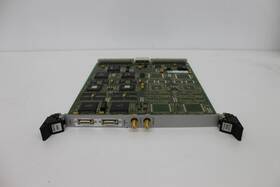
( Brand: Aqs ), ( Manufacturer Part Number: H9773 ), ( Type: Lab., Medical, Dental Vet )
Review AQS Control Module Bruker Biospin Mri
The **AQS H9773 Control Module** from **Bruker BioSpin** represents a cornerstone of high-performance magnetic resonance imaging (MRI) and nuclear magnetic resonance (NMR) systems, engineered to deliver unparalleled precision, reliability, and flexibility in scientific research and clinical diagnostics. Designed as an integral component of Bruker s advanced **Avance III HD** and **Avance Neo** NMR spectrometers, as well as MRI platforms, this control module serves as the brain of the system, orchestrating every aspect of data acquisition, signal processing, and experimental execution with sub-millisecond timing accuracy. Built upon Bruker s proprietary **TopSpin** and **Paravision** software ecosystems, the H9773 module integrates seamlessly with cutting-edge hardware, including superconducting magnets, cryogenically cooled probes, and high-speed gradient amplifiers, to enable breakthroughs in structural biology, materials science, metabolomics, and in vivo imaging.
At its core, the H9773 control module features a **high-speed digital signal processor (DSP)** architecture optimized for real-time pulse sequencing, parallel acquisition, and multi-dimensional spectroscopy. Its **FPGA-based hardware acceleration** ensures deterministic timing for complex pulse programs, such as those required for **hyperpolarized MRI, diffusion tensor imaging (DTI), or dynamic contrast-enhanced (DCE) studies**, while its **16-bit analog-to-digital converters (ADCs)** with sampling rates exceeding **100 MS/s** capture high-resolution spectral data without aliasing or distortion. The module s **modular design** allows for scalability, accommodating configurations from compact benchtop NMR spectrometers to large-bore clinical MRI systems with field strengths ranging from **low-field (0.2 T) to ultra-high-field (900 MHz or 21.1 T)**. This adaptability is further enhanced by **PCIe-based expansion slots**, enabling the integration of specialized hardware accelerators for tasks like **parallel imaging reconstruction, compressed sensing, or machine learning-based artifact correction**.
Beyond raw performance, the H9773 excels in **user experience and workflow efficiency**, offering an intuitive graphical interface for pulse program design, real-time monitoring, and automated calibration routines. Its **TopSpin software integration** provides access to a vast library of pre-optimized pulse sequences, from **standard 1H NMR experiments** to **advanced techniques like NOESY, HSQC, or 3D imaging protocols**, while **Paravision** ensures seamless operation for MRI applications, including **multi-slice acquisition, shimming optimization, and advanced coil driving schemes**. The module also supports **remote control and scripting** via **Python, MATLAB, or Bruker s proprietary scripting language**, enabling researchers to automate repetitive tasks or develop custom algorithms for specialized applications. For clinical environments, the H9773 incorporates **HIPAA-compliant data handling**, **DICOM compatibility**, and **interoperability with PACS systems**, ensuring seamless integration into hospital workflows while maintaining the highest standards of data security and traceability.
Durability and reliability are paramount in the demanding environments of MRI and NMR laboratories, and the H9773 is built to withstand continuous operation with **redundant power supplies, fail-safe cooling systems, and self-diagnostic tools** that monitor critical components in real time. Its **industrial-grade construction**, featuring **conductive shielding and electromagnetic interference (EMI) suppression**, ensures stable performance even in electrically noisy settings, while its **low thermal drift** maintains spectral fidelity across extended acquisition periods. Additionally, the module s **serviceability** is streamlined through **modular firmware updates**, allowing for **over-the-air (OTA) patches** to incorporate the latest advancements in pulse design, calibration algorithms, or hardware compatibility without requiring physical access to the system. This commitment to longevity and adaptability positions the H9773 as a future-proof investment, capable of evolving alongside emerging technologies in magnetic resonance.
Whether deployed in a **pharmaceutical R&D lab** for drug discovery, a **neuroscience research facility** for in vivo brain imaging, or a **clinical MRI center** for diagnostic radiology, the **AQS H9773 Control Module** from Bruker BioSpin embodies the pinnacle of engineering excellence in magnetic resonance technology. By combining **unmatched computational power, software versatility, and hardware robustness**, it empowers scientists and clinicians to push the boundaries of what is possible in molecular imaging, materials characterization, and biomedical research one precise, high-resolution measurement at a time.
### **Pros and Cons of buying a AQS H9773 Control Module (Bruker BioSpin MRI)**
#### **Pros**
1. **Compatibility with Bruker MRI Systems** The AQS H9773 is designed specifically for Bruker BioSpin MRI platforms, ensuring seamless integration with existing hardware and software. This reduces the risk of compatibility issues that may arise with third-party modules.
2. **Enhanced Performance and Stability** Bruker s proprietary control modules are optimized for high reliability and performance, minimizing downtime and improving diagnostic accuracy. The AQS series is known for its robust signal processing and calibration capabilities.
3. **Support for Advanced Imaging Techniques** The module supports modern MRI techniques, including high-resolution imaging, functional MRI (fMRI), and specialized sequences like diffusion tensor imaging (DTI) and spectroscopy. This makes it suitable for research and clinical applications requiring cutting-edge functionality.
4. **OEM and Service Backing** As an original equipment manufacturer (OEM) component, the AQS H9773 comes with full technical support from Bruker BioSpin, including warranty coverage, firmware updates, and troubleshooting assistance. This is particularly valuable for institutions relying on MRI for critical operations.
5. **Future-Proofing** Bruker regularly updates its software and hardware, ensuring that the AQS H9773 can be upgraded or integrated with newer MRI systems as technology evolves. This reduces the need for costly replacements in the long term.
6. **Regulatory Compliance** Bruker modules are designed to meet international safety and regulatory standards (e.g., FDA, CE, IEC), which is essential for clinical environments where compliance is mandatory.
7. **Reduced Risk of Counterfeit Parts** Purchasing directly from Bruker or authorized distributors ensures authenticity, avoiding the potential issues associated with aftermarket or gray-market components.
---
#### **Cons**
1. **High Cost** Bruker s OEM components are premium-priced, often significantly more expensive than third-party alternatives. For institutions with tight budgets, this can be a major drawback, especially if the module is not strictly necessary for core functionality.
2. **Limited Availability of Spare Parts** While Bruker provides support, finding replacement parts or technicians with expertise in AQS modules may be challenging outside major research or clinical centers. This could lead to extended repair times in remote or less-resourced settings.
3. **Vendor Lock-In** Relying on Bruker s proprietary technology means limited flexibility if the institution decides to switch MRI vendors in the future. Downgrading or migrating to a different system may require additional investments in compatibility solutions.
4. **Complex Installation and Configuration** The AQS H9773 may require specialized knowledge for proper installation, calibration, and integration with the MRI system. This could necessitate hiring trained technicians or consulting Bruker s support team, adding to operational costs.
5. **Longer Lead Times** Due to the specialized nature of the component, ordering may involve longer wait times compared to off-the-shelf parts. This could delay MRI system upgrades or repairs if the module is unavailable from stock.
6. **Potential for Overkill** For smaller clinics or research labs with basic MRI needs, the advanced features of the AQS H9773 may be unnecessary, making the investment less justifiable. A more cost-effective alternative might suffice.
7. **Dependence on Bruker s Roadmap** If Bruker discontinues support for older models or shifts focus away from certain MRI applications, institutions using the AQS H9773 may face challenges in maintaining compatibility with evolving standards.
---
### **Conclusion**
The **AQS H9773 Control Module** from Bruker BioSpin is a high-quality, reliable, and feature-rich component ideal for institutions with advanced MRI requirements, strong technical support needs, or those committed to Bruker s ecosystem. Its strengths lie in performance, compatibility, and long-term support, making it a sound investment for research hospitals, academic institutions, or clinical centers prioritizing cutting-edge imaging.
However, the **high cost, vendor lock-in risks, and potential complexity** make it less suitable for budget-conscious buyers, smaller clinics, or those considering future system flexibility. If the primary goal is cost efficiency or minimal dependency on a single vendor, exploring alternative modules (e.g., from other MRI manufacturers or certified refurbished parts) may be worth evaluating.
### **Recommendation**
- **Buy the AQS H9773 if:**- You are already invested in Bruker MRI systems and require a reliable, high-performance control module.
- Your institution relies on advanced imaging techniques and needs full technical support.
- Budget constraints are not a limiting factor, and long-term stability is a priority.
- **Consider alternatives if:**- You are operating on a tight budget and can find a functionally equivalent module from another vendor.
- Your MRI system is not exclusively Bruker-based, and you want flexibility for future upgrades.
- You can source a refurbished or certified pre-owned AQS module at a reduced cost without compromising performance.
For most **high-end research or clinical MRI environments**, the AQS H9773 remains a **strong, justified purchase** due to its proven reliability and integration benefits. However, a thorough cost-benefit analysis including long-term support costs and potential alternatives is advisable before finalizing the decision.
Details:
Layette, AL 35555. See pictures, item comes as shown. 220 2nd St NW. Info on Unit.
Unit is used, pulled from working decommissioned Bruker BioSpin MRI. AQS H9773 Control Module Bruker BioSpin MRI.
part #: h9773 prices
- $1299.95-$1688.00
specifications tubinglabsupplyu:
- brand: Aqs
- mpn: H9773
- type: Lab., Medical, Dental Vet
general tubinglabsupplyu:
- Healthcare, Lab Dental > Medical, Lab Dental Supplies > Other Medical, Lab Dental Supplies
- condition: Used
payments tubinglabsupplyu:
- other
- wallet: Paypal
- credit card: Diners-club
returns tubinglabsupplyu:
- method: Money back
- paid by: Buyer
- time: 30 Days
- policy: Returns Accepted
seller tubinglabsupplyu:
- # reviews: 1985
- city: Fayette, Alabama
- rating: 99.8%
shipping tubinglabsupplyu:
- class: Standard
- cost: $16.28
- service: UPS Ground, FedEx Ground / FedEx Home Delivery
- carrier: UPS, FedEx
- transit: 3-7 Days
- type: Calculated
offer tubinglabsupplyu:
- availability: In Stock
- options: Ship-to-home
- sold: 0
- started: March 24, 2026
- best offers: True
- quantity: 1
Aqs H9773 Is Similar To:
- Aqs Z003642 Ecl05 Sgu400 Module Bruker Biospin Mri (71% similar) Unit is used, pulled from working decommissioned bruker biospin mri. Info on unit. See pictures, item comes as shown. Layette, al 35555. 220 2ND st NW. Aqs ECL05 Z003642 SGU400 module bruker biospin mri...(March 24th, 2026)
- Aqs Z003572 Ecl01 Hadc 2 Module Bruker Biospin Mri (71% similar) Unit is used, pulled from working decommissioned bruker biospin mri. Layette, al 35555. Info on unit. Aqs ECL01 Z003572 HADC/2 module bruker biospin mri. 220 2ND st NW. See pictures, item comes as shown...(March 24th, 2026)
- Aqs H9503v1 Ecl02 Ccu11 Controller Module Bruker Biospin Mri (79.6% similar) 220 2ND st NW. Aqs ECL02 CCU11 H9503V1 controller module bruker biospin mri. Info on unit. Layette, al 35555. Unit is used, pulled from working decommissioned bruker biospin mri. See pictures, item comes as shown...(March 25th, 2026)
- Aqs H9520 German Power Aqs-464w Supply Bruker Biospin Mri (54% similar) Unit is used, pulled from working decommissioned bruker biospin mri. Layette, al 35555. Info on unit. German power H9520 AQS-464W supply bruker biospin mri. See pictures, item comes as shown. 220 2ND st NW. > 110-240VAC, 47-63HZ...(March 25th, 2026)
- Aqs H9530 Ecl01 Psd Board Bruker Biospin Mri (69% similar) Layette, al 35555. Unit is used, pulled from working decommissioned bruker biospin mri. 220 2ND st NW. Aqs ECL01 H9530 pad board bruker biospin mri. Info on unit. See pictures, item comes as shown...(March 26th, 2026)
- Aqs H9500 Acb-x Acb Module Bruker Biospin Mri (75% similar) > ABC extended board. Unit is used, pulled from working decommissioned bruker biospin mri. See pictures, item comes as shown. Info on unit. Layette, al 35555. 220 2ND st NW. Aqs ABC-x H9500 ABC module bruker biospin mri...(March 26th, 2026)