AQS H9503V1 Controller Module Bruker Biospin Mri ECL02 CCU11
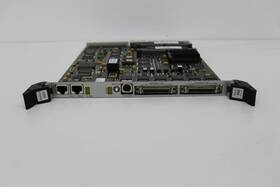
( Brand: Aqs ), ( Manufacturer Part Number: H9503V1 ), ( Type: Lab., Medical, Dental Vet )
Review AQS Controller Module Bruker Biospin Mri
The **AQS H9503V1 ECL02 CCU11 Controller Module** from **Bruker BioSpin** represents a cornerstone of high-performance magnetic resonance imaging (MRI) and nuclear magnetic resonance (NMR) systems, engineered to deliver unparalleled precision, reliability, and flexibility in scientific research and clinical diagnostics. Designed as a critical component of Bruker s advanced **Avance III HD** and **Avance Neo** NMR spectrometers, as well as **BioSpec** and **ClinScan** MRI platforms, this controller module serves as the central nervous system for the entire spectrometer or MRI system, orchestrating complex signal processing, radiofrequency (RF) transmission, and gradient control with sub-millisecond timing accuracy. Built upon Bruker s proprietary **ECL02** (Enhanced Control Logic) architecture, the **H9503V1** integrates seamlessly with the **CCU11** (Central Control Unit) to provide a robust, scalable solution capable of managing multi-channel RF excitation, reception, and gradient amplification while ensuring minimal signal distortion and optimal dynamic range. Its modular design allows for easy integration into both high-field NMR spectrometers (ranging from 400 MHz to 1 GHz and beyond) and clinical MRI systems, accommodating a wide array of probe configurations, including cryogenically cooled RF coils, surface coils, and phased-array systems. The controller module employs **FPGA-based digital signal processing**, enabling real-time compensation for system imperfections such as eddy currents, RF leakage, and gradient nonlinearities, thereby enhancing image resolution and spectral fidelity. Additionally, its **high-speed digital interfaces** (e.g., LVDS, PCIe, and Ethernet) facilitate seamless communication with external hardware, including digital filters, ADCs, and data acquisition systems, while its **software-defined architecture** ensures compatibility with Bruker s **TopSpin**, **Paravision**, and **ICON-NMR** software suites, allowing researchers and clinicians to execute sophisticated pulse sequences with minimal latency. Whether deployed in academic research labs for structural biology, materials science, or metabolomics, or in clinical environments for cardiac MRI, neuroimaging, or functional MRI (fMRI), the **AQS H9503V1** exemplifies Bruker s commitment to pushing the boundaries of NMR and MRI technology, offering a blend of cutting-edge performance, long-term stability, and future-proof scalability.
### **Pros and Cons of buying a Bruker BioSpin AQS H9503V1 ECL02 CCU11 Controller Module for MRI Systems**
#### **Pros**
1. **High Performance and Precision**
The AQS (Advanced Queue System) controller module is designed for high-resolution imaging and spectroscopy, offering superior signal processing capabilities. It ensures accurate gradient and RF pulse shaping, which is critical for advanced MRI techniques such as diffusion, perfusion, and functional imaging.
2. **Compatibility with Bruker MRI Systems**
As a proprietary module from Bruker BioSpin, it is fully integrated with Bruker s MRI platforms, ensuring seamless operation with existing hardware and software. This reduces compatibility issues and simplifies maintenance.
3. **Advanced Imaging Capabilities**
The ECL02 (Echo-Planar Imaging Controller) and CCU11 (Gradient Amplifier Control Unit) work together to support fast imaging sequences, parallel imaging, and multi-coil techniques. This enhances scan speed and image quality, which is valuable for clinical and research applications.
4. **Reliability and Durability**
Bruker is a well-established manufacturer in the MRI industry, known for robust and long-lasting hardware. The AQS module is built to withstand continuous use in clinical or research environments, reducing downtime.
5. **Software Integration with Avanto, Skyra, and Other Bruker Platforms**
The module is optimized for Bruker s flagship MRI systems (e.g., Avanto, Skyra, Magnetom), allowing access to advanced imaging protocols and post-processing tools. This is particularly beneficial for institutions investing in Bruker s ecosystem.
6. **Support for High-Field MRI**
The module is designed to work with high-field magnets (e.g., 3T, 7T), which are essential for research applications requiring high spatial resolution and contrast.
7. **Future-Proofing**
Bruker regularly updates its software and firmware, ensuring that the AQS module can be upgraded to support new imaging techniques and compliance standards over time.
---
#### **Cons**
1. **High Cost**
Bruker MRI components, including controller modules, are among the most expensive in the market. The AQS H9503V1 ECL02 CCU11 is no exception, making it a significant financial investment, especially for smaller clinics or research labs with limited budgets.
2. **Vendor Lock-In**
Since the module is proprietary to Bruker, upgrading to a different MRI vendor (e.g., Siemens, GE, Philips) in the future may require replacing the entire controller system, leading to additional costs and potential downtime.
3. **Complex Installation and Maintenance**
The AQS system requires specialized technical expertise for installation, calibration, and troubleshooting. Hospitals or research centers without in-house Bruker-certified technicians may need to rely on expensive third-party support.
4. **Longer Procurement and Delivery Times**
Bruker s components often have extended lead times due to high demand and manufacturing constraints. Institutions needing urgent upgrades may face delays.
5. **Software Dependency**
The full functionality of the AQS module relies on Bruker s imaging software (e.g., ParaVision). If the institution does not already use Bruker s software, there may be a learning curve for radiologists, technicians, and researchers.
6. **Potential for Obsolescence**
While Bruker provides updates, newer MRI systems may eventually replace older controller modules. Institutions must weigh whether the investment aligns with their long-term equipment strategy.
7. **Limited Second-Hand Market**
Unlike some consumer electronics, MRI controller modules are not commonly resold due to their specialized nature. This reduces options for cost-effective upgrades or replacements.
---
### **Ending Conclusion**
The **Bruker BioSpin AQS H9503V1 ECL02 CCU11 Controller Module** is a high-performance, reliable, and feature-rich component for advanced MRI applications. It excels in precision, compatibility with Bruker systems, and support for cutting-edge imaging techniques. However, its **high cost, vendor lock-in risks, and dependency on specialized support** make it a significant commitment.
This module is best suited for:- **Large hospitals or research institutions** with existing Bruker MRI infrastructure.
- **Facilities prioritizing high-resolution imaging, spectroscopy, or multi-coil techniques.**
- **Users who can justify the investment based on long-term ROI and compatibility.**
For **smaller clinics, budget-conscious buyers, or those considering multi-vendor setups**, alternative options (e.g., Siemens Syngo, GE s WIPR, or third-party gradient amplifiers) may offer more flexibility or cost efficiency.
### **Recommendation**
If your institution is **fully committed to Bruker s ecosystem** and requires the **highest imaging performance** for clinical or research purposes, the AQS H9503V1 ECL02 CCU11 is a strong choice. However, **conduct a thorough cost-benefit analysis**, including long-term maintenance and potential upgrade paths, before purchasing.
For institutions exploring alternatives, **consult Bruker s technical support, compare with other vendors, and assess whether the module aligns with your imaging workflows** before making a final decision.
Details:
220 2nd St NW. AQS ECL02 CCU11 H9503V1 Controller Module Bruker BioSpin MRI. Info on Unit. Layette, AL 35555.
Unit is used, pulled from working decommissioned Bruker BioSpin MRI. See pictures, item comes as shown.
part #: h9503v1 prices
- $279.97-$1488.00
specifications tubinglabsupplyu:
- brand: Aqs
- mpn: H9503v1
- type: Lab., Medical, Dental Vet
seller tubinglabsupplyu:
- # reviews: 1986
- rating: 99.8%
- city: Fayette, Alabama
general tubinglabsupplyu:
- Healthcare, Lab Dental > Medical, Lab Dental Supplies > Other Medical, Lab Dental Supplies
- condition: Used
shipping tubinglabsupplyu:
- class: Economy, Standard
- transit: 5-8 Days
- cost: $11.65
- carrier: UPS, FedEx, USPS
- type: Calculated
- service: UPS Ground Saver, FedEx Ground Economy, UPS Ground, USPS Ground Advantage
offer tubinglabsupplyu:
- best offers: True
- quantity: 2
- started: March 25, 2026
- availability: In Stock
- options: Ship-to-home
- sold: 0
returns tubinglabsupplyu:
- policy: Returns Accepted
- method: Money back
- paid by: Buyer
- time: 30 Days
payments tubinglabsupplyu:
- credit card: Visa
- other
- wallet: Google-pay
Aqs H9503V1 Is Similar To:
- Aqs Z003642 Ecl05 Sgu400 Module Bruker Biospin Mri (70.9% similar) Unit is used, pulled from working decommissioned bruker biospin mri. Info on unit. See pictures, item comes as shown. Layette, al 35555. 220 2ND st NW. Aqs ECL05 Z003642 SGU400 module bruker biospin mri...(March 24th, 2026)
- Aqs H9773 Control Module Bruker Biospin Mri (79.6% similar) Layette, al 35555. See pictures, item comes as shown. 220 2ND st NW. Info on unit. Unit is used, pulled from working decommissioned bruker biospin mri. Aqs H9773 control module bruker biospin mri...(March 24th, 2026)
- Aqs Z003572 Ecl01 Hadc 2 Module Bruker Biospin Mri (70.9% similar) Unit is used, pulled from working decommissioned bruker biospin mri. Layette, al 35555. Info on unit. Aqs ECL01 Z003572 HADC/2 module bruker biospin mri. 220 2ND st NW. See pictures, item comes as shown...(March 24th, 2026)
- Aqs H9520 German Power Aqs-464w Supply Bruker Biospin Mri (59.8% similar) Unit is used, pulled from working decommissioned bruker biospin mri. Layette, al 35555. Info on unit. German power H9520 AQS-464W supply bruker biospin mri. See pictures, item comes as shown. 220 2ND st NW. > 110-240VAC, 47-63HZ...(March 25th, 2026)
- Aqs H9530 Ecl01 Psd Board Bruker Biospin Mri (67.3% similar) Layette, al 35555. Unit is used, pulled from working decommissioned bruker biospin mri. 220 2ND st NW. Aqs ECL01 H9530 pad board bruker biospin mri. Info on unit. See pictures, item comes as shown...(March 26th, 2026)
- Aqs H9500 Acb-x Acb Module Bruker Biospin Mri (72.4% similar) > ABC extended board. Unit is used, pulled from working decommissioned bruker biospin mri. See pictures, item comes as shown. Info on unit. Layette, al 35555. 220 2ND st NW. Aqs ABC-x H9500 ABC module bruker biospin mri...(March 26th, 2026)