OHIO 60448 Footed Porcelain Desiccator Plate Biology Lab 190MM 5/8 Chemistry
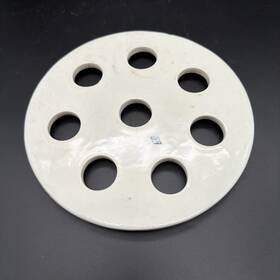
( Brand: Ohio ), ( Manufacturer Part Number: 60448 ), ( Model: 190MM ), ( Part Type: Plate ), ( Country Of Origin: United States )
Review OHIO Footed Porcelain Desiccator Plate Holes 5/8 Inch Biology Chemistry Lab
The **60448 Footed Porcelain Desiccator Plate (5/8" Thickness) for Biology and Chemistry Labs** is a precision-engineered laboratory accessory designed to enhance the efficiency and reliability of desiccation processes in scientific research and educational settings. Crafted from high-quality porcelain, this durable plate features a sturdy, footed base that ensures stability and even heat distribution when placed over a hot plate or burner, making it ideal for drying delicate specimens, glassware, or chemical samples without direct contact with the heat source. Its smooth, non-porous surface resists chemical corrosion and thermal shock, allowing for repeated use across a wide range of applications, from sterilizing petri dishes and microscope slides to drying reagents and biological samples for long-term storage. The **5/8-inch thickness** strikes a balance between structural integrity and weight, providing ample surface area for accommodating multiple containers or specimens while maintaining a manageable footprint in the lab. Perfect for use in both teaching laboratories and advanced research environments, this desiccator plate adheres to rigorous safety standards, ensuring consistent performance in environments where precision and sterility are paramount. Whether used in conjunction with a desiccant like silica gel or employed as a standalone drying platform, this porcelain plate exemplifies reliability and versatility, making it an indispensable tool for any chemistry or biology laboratory seeking to optimize drying procedures with minimal risk of contamination or damage to sensitive materials.
**Pros and Cons of Buying a 60448 Footed Porcelain Desiccator Plate (5/8" for Biology/Chemistry Labs)**
### **Pros**
1. **Durability and Longevity** Porcelain is highly resistant to chemical corrosion, heat, and mechanical stress, making it ideal for long-term use in demanding lab environments. Unlike plastic or glass alternatives, it is less prone to cracking or warping over time.
2. **Chemical Resistance** The material is inert to most acids, bases, and organic solvents, ensuring that it won t react with or degrade from common lab reagents. This makes it safe for use with a wide range of experiments, including drying, storage, or desiccation of sensitive samples.
3. **Heat Resistance** Porcelain can withstand high temperatures without deforming, making it suitable for applications involving heating (e.g., drying samples in an oven or under a heat lamp). This is particularly useful in chemistry labs where precise temperature control is critical.
4. **Precision Fit for Desiccators** The 5/8" thickness and footed design ensure a secure, even seal within standard desiccators, preventing moisture or contaminants from seeping into stored samples. This is essential for maintaining the integrity of dried or sensitive materials.
5. **Easy to Clean and Sterilize** Porcelain surfaces can be thoroughly cleaned with solvents, steam, or autoclaving (if compatible with the specific design), reducing the risk of cross-contamination between experiments. This is advantageous in microbiology or sterile chemistry applications.
6. **Compatibility with Desiccants** The flat, smooth surface allows for effective contact with desiccants (e.g., silica gel, calcium chloride), ensuring optimal moisture absorption. This is crucial for preserving samples like biological specimens, chemicals, or electronic components.
7. **Standardized Size** The 60448 model is a common size in lab settings, making it easy to source replacements or accessories (e.g., lids, gaskets) if needed. This standardization simplifies inventory management.
8. **Aesthetic and Professional Appearance** Porcelain has a clean, uniform look that aligns with laboratory standards, contributing to a professional workspace. It also resists staining better than some plastic alternatives.
---
### **Cons**
1. **Fragility Compared to Metal** While porcelain is durable, it is more brittle than stainless steel or certain plastics. Dropping it or subjecting it to sudden impacts can cause cracks or shattering, especially if the material is thin or damaged over time.
2. **Weight** Porcelain plates are heavier than plastic or some glass alternatives, which can make handling cumbersome, particularly when moving multiple plates or setting up desiccators in bulk.
3. **Cost** Porcelain desiccator plates are generally more expensive than plastic or low-cost glass options. The initial investment may be higher, though the long-term durability can offset this over time.
4. **Limited Flexibility** Unlike plastic, porcelain cannot be bent or molded to fit non-standard desiccators. If the lab uses custom or non-standard equipment, compatibility may be an issue.
5. **Potential for Scratches or Chips** While porcelain is hard, it can develop micro-scratches or chips from abrasive cleaning tools or rough handling. These imperfections may not affect functionality but can detract from the plate s appearance or create micro-habitats for contaminants.
6. **Thermal Shock Sensitivity** Although porcelain is heat-resistant, rapid temperature changes (e.g., moving a hot plate from an oven to a cold surface) can cause cracking due to thermal stress. This requires careful handling during temperature transitions.
7. **Maintenance of Seals** Over time, the rubber gaskets or seals used with desiccator plates may degrade and require replacement. While this isn t specific to porcelain, the plate s rigidity means it cannot accommodate worn seals as easily as some flexible materials.
8. **Limited Availability of Replacements** While common, specialized porcelain plates may not be as widely stocked as generic labware. Ordering replacements could involve longer lead times compared to plastic or glass alternatives.
---
### **Conclusion**
The **60448 footed porcelain desiccator plate** is an excellent investment for biology and chemistry labs prioritizing **durability, chemical resistance, and precision**. Its ability to withstand harsh conditions, maintain sample integrity, and integrate seamlessly with standard desiccators makes it a reliable choice for long-term use. However, its **higher cost, weight, and fragility** may be drawbacks for labs with limited budgets or those handling extremely delicate or high-volume samples where flexibility is critical.
For most standard laboratory applications particularly in chemistry, microbiology, or general sample storage **the pros outweigh the cons**. The plate s longevity and performance justify the initial expense, especially in environments where contamination control and sample preservation are paramount.
### **Recommendation**
- **Buy the porcelain plate if:**- Your lab frequently works with **corrosive chemicals, high temperatures, or requires sterile conditions**.
- You prioritize **long-term durability and minimal maintenance**.
- You use **standard desiccators** and need a precise, chemical-resistant surface.
- Budget constraints allow for the higher upfront cost, as it will likely outlast cheaper alternatives.
- **Consider alternatives (e.g., borosilicate glass or high-quality plastic) if:**- Your lab handles **extremely fragile samples** or requires **easy replacement** due to high turnover.
- **Weight or handling ease** is a significant concern (e.g., frequent moving of desiccators).
- You work with **non-standard desiccator sizes** or need **flexible materials**.
- Cost is a critical factor, and you can accept slightly lower chemical resistance or durability.
For the average biology or chemistry lab, the **porcelain desiccator plate is highly recommended** for its balance of performance and reliability. Pair it with proper handling (e.g., avoiding thermal shock, using gentle cleaning methods) to maximize its lifespan.
Details:
part #: 60448 prices
- $100.00-$125.00
specifications tubinglabsupplyu:
- brand: Ohio
- mpn: 60448
- model: 190mm
- part type: Plate
- country of origin: United States
returns tubinglabsupplyu:
- policy: No Returns
payments tubinglabsupplyu:
- credit card: Mastercard
- wallet: Google-pay
- other
shipping tubinglabsupplyu:
- carrier: USPS
- transit: 4-7 Days
- type: Calculated
- class: Standard
- service: USPS Ground Advantage
- cost: $6.50
offer tubinglabsupplyu:
- sold: 0
- availability: In Stock
- quantity: 1
- started: February 28, 2026
- best offers: True
- options: Ship-to-home
general tubinglabsupplyu:
- condition: Used
- Healthcare, Lab Dental > Medical, Lab Dental Supplies > Other Medical, Lab Dental Supplies
seller tubinglabsupplyu:
- city: Ankeny, Iowa
- # reviews: 2300
- rating: 100.0%