MOLECULAR DIMENSIONS MD7-500 Embl Esrf Sample Changer Kit Embl/esrf
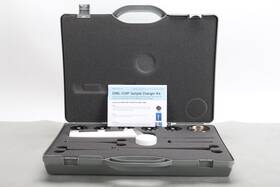
( Brand: Molecular Dimensions ), ( Manufacturer Part Number: MD7-500 ), ( Part Type: Changer )
Review MOLECULAR DIMENSIONS Embl/esrf Sample Changer Kit
The **Molecular Dimensions MD7-500 EMBL/ESRF Sample Changer Kit** is a high-precision, automated sample handling solution meticulously engineered for synchrotron and crystallography laboratories, particularly optimized for the European Molecular Biology Laboratory (EMBL) and the European Synchrotron Radiation Facility (ESRF). This advanced kit is designed to seamlessly integrate with the MD7-500 automated sample changer, a robust and versatile system that enhances efficiency, reproducibility, and throughput in macromolecular crystallography (MX) experiments. The kit features a modular and scalable architecture, allowing researchers to customize their setup according to specific experimental demands, whether working with cryo-loops, pins, or other sample mounting methods. At its core, the system employs a high-accuracy robotic arm with sub-micron precision, ensuring flawless sample positioning and alignment for X-ray diffraction studies. The EMBL/ESRF configuration is particularly tailored to accommodate the stringent requirements of high-brilliance synchrotron beamlines, where rapid sample exchange, minimal dead time, and consistent sample orientation are critical for maximizing data collection efficiency.
The kit includes a sophisticated **sample storage and retrieval mechanism**, incorporating a high-density, temperature-controlled sample holder capable of accommodating hundreds of samples in an organized, indexed format. This ensures quick and reliable access to individual samples, reducing manual intervention and human error while maintaining optimal cryogenic conditions for extended periods. The system is equipped with **real-time monitoring and feedback systems**, allowing operators to track sample status, temperature, and positioning with millimeter precision, which is essential for maintaining the integrity of delicate macromolecular crystals. Additionally, the kit integrates seamlessly with existing laboratory infrastructure, including data acquisition software and beamline control systems, enabling automated workflows that streamline the entire crystallography process from sample loading to data processing.
One of the standout features of the MD7-500 EMBL/ESRF kit is its **adaptability to diverse sample formats**, including standard cryo-loops, pins, and specialized mounting devices, making it suitable for a wide range of experimental setups. The robotic arm s programmable motion profiles and force-sensitive feedback ensure gentle and precise handling of samples, minimizing the risk of damage during transfer. Furthermore, the system is designed with **redundant safety mechanisms**, including emergency stops, collision avoidance, and environmental sensors, to prevent operational errors and ensure the longevity of both the samples and the equipment. The kit s modular design also allows for future upgrades, such as the addition of new sample carriers, automated liquid handling, or compatibility with emerging technologies like in situ crystallization setups.
For laboratories operating at the forefront of structural biology, the MD7-500 EMBL/ESRF Sample Changer Kit represents a significant advancement in automation and precision. By automating repetitive tasks and minimizing human intervention, it not only accelerates the pace of research but also enhances the reliability of experimental results. Whether deployed in a high-throughput screening environment or a specialized beamline facility, this system empowers researchers to focus on data interpretation and scientific discovery rather than labor-intensive sample management. With its combination of cutting-edge robotics, robust engineering, and seamless integration capabilities, the MD7-500 kit is an indispensable tool for advancing macromolecular crystallography and structural biology research.
### **Pros and Cons of buying a Molecular Dimensions MD7-500 EMBL/ESRF Sample Changer Kit**
#### **Pros**
1. **Automation and Efficiency**
The MD7-500 Sample Changer Kit is designed to automate sample loading and unloading for crystallography experiments, significantly reducing manual intervention. This is particularly valuable in high-throughput screening and long-running experiments where human error or fatigue could compromise results.
2. **Compatibility with Existing Systems**
The kit is engineered to integrate seamlessly with Molecular Dimensions MD7-500 goniometer, which is widely used in macromolecular crystallography (MX) labs. This ensures compatibility with existing infrastructure, minimizing the need for additional hardware or software modifications.
3. **Enhanced Sample Management**
The kit supports automated handling of multiple samples, including those stored in 96-well or 384-well plates, which is ideal for large-scale screening projects. It can also manage cryo-loop or pin transfer systems, improving workflow efficiency.
4. **Reduced Operator Fatigue**
By automating repetitive tasks such as sample changing, the kit helps reduce operator fatigue, allowing researchers to focus on data analysis, experiment design, or other critical tasks.
5. **Precision and Consistency**
The automated system ensures precise positioning and consistent sample exposure, which is crucial for high-quality data collection, especially in experiments requiring repeated measurements or fine adjustments.
6. **Support for Cryogenic and Non-Cryogenic Experiments**
The kit is compatible with both cryogenic and non-cryogenic sample handling, making it versatile for a range of experimental conditions without requiring separate setups.
7. **Integration with Data Collection Software**
The MD7-500 system is designed to work with common crystallography data collection software (e.g., XDS, Mosflm, or proprietary solutions), allowing for seamless integration into existing workflows.
8. **Durability and Reliability**
Molecular Dimensions is a reputable manufacturer known for producing robust scientific equipment. The MD7-500 system, including the sample changer kit, is built to withstand frequent use in demanding laboratory environments.
9. **Scalability for Research Labs**
The kit is suitable for both small-scale research labs and larger facilities, making it a practical investment for institutions looking to upgrade their crystallography capabilities without over-investing in overly complex systems.
10. **Technical Support and Training**
Molecular Dimensions provides technical support and training resources, which can be invaluable for labs new to automated sample changers or those requiring troubleshooting assistance.
---
#### **Cons**
1. **High Initial Cost**
The MD7-500 Sample Changer Kit is a specialized piece of equipment with a significant upfront cost. For smaller labs or individual researchers, this may represent a substantial financial investment, especially if budget constraints are a concern.
2. **Maintenance and Calibration Requirements**
Automated systems require regular maintenance to ensure optimal performance. Calibration, cleaning, and potential repairs can add ongoing operational costs and may require specialized expertise, depending on the lab s technical resources.
3. **Learning Curve**
While the system is user-friendly, there is still a learning curve associated with setting up, programming, and troubleshooting the automated sample changer. Researchers or technicians may need dedicated training time to become proficient.
4. **Space and Infrastructure Needs**
The MD7-500 system, including the sample changer, requires adequate bench space and may need integration with other lab equipment (e.g., cryostats, detectors). Labs with limited space may find it challenging to accommodate the system without modifications.
5. **Dependency on Software and Firmware Updates**
Like many automated systems, the MD7-500 relies on software and firmware that may require periodic updates. Compatibility issues or bugs in updates could temporarily disrupt workflows until they are resolved.
6. **Limited Customization**
The kit is designed for general use and may not offer extensive customization for highly specialized applications. Labs with unique experimental requirements might need to adapt their workflows or consider additional accessories.
7. **Potential Downtime**
Mechanical or electronic failures, while rare, can occur and may result in downtime. For time-sensitive experiments, this could delay progress until the issue is resolved.
8. **Training and Staffing Requirements**
Operating an automated system effectively often requires trained personnel. If a lab lacks experienced staff or if key personnel leave, the system s efficiency may be compromised until new training is provided.
9. **Compatibility with Non-Standard Sample Formats**
While the kit supports common sample formats, labs using non-standard or proprietary sample holders may encounter compatibility issues, requiring additional adapters or modifications.
10. **Long-Term Costs**
Beyond the initial purchase, costs associated with consumables (e.g., cryo-loops, pins), software licenses, and potential upgrades can accumulate over time, adding to the overall expense.
---
### **Conclusion**
The Molecular Dimensions MD7-500 EMBL/ESRF Sample Changer Kit is a powerful tool for automating sample handling in macromolecular crystallography, offering significant advantages in terms of efficiency, precision, and workflow integration. Its compatibility with existing MD7-500 systems and support for high-throughput experiments make it a valuable investment for research labs prioritizing automation and reproducibility.
However, the high initial cost, maintenance requirements, and potential learning curve are notable drawbacks, particularly for smaller labs or those with limited resources. The decision to purchase the kit should be based on the lab s specific needs, budget, and long-term goals. If the primary objective is to streamline sample management and improve data collection efficiency, the benefits often outweigh the drawbacks. Conversely, labs with minimal automation needs or tight budget constraints may find alternative solutions more suitable.
### **Recommendation**
The MD7-500 Sample Changer Kit is **highly recommended for:**- Large research institutions or core facilities with established crystallography programs and the budget to invest in advanced automation.
- Labs conducting high-throughput screening or long-running experiments where manual sample handling would be inefficient.
- Institutions that already use the MD7-500 goniometer and seek to enhance their existing setup without switching platforms.
For **smaller labs, individual researchers, or budget-conscious institutions**, it may be worthwhile to:- Explore alternative automated sample changers from other manufacturers (e.g., Rigaku, Bruker) that may offer comparable functionality at a lower cost.
- Consider leasing or borrowing the system temporarily to evaluate its benefits before committing to a purchase.
- Assess whether a manual or semi-automated solution (e.g., robotic arms for partial automation) could meet immediate needs without the full investment.
Ultimately, the MD7-500 Sample Changer Kit is a strong choice for labs where automation is a priority and the financial and operational resources are available to support its implementation.
Details:
Item was recently removed from working service and is in excellent order. Cosmetically in good condition showing minor scuffs / scratches blemishes from previous use. Molecular Dimensions MD7-500 EMBL/ESRF Sample Changer Kit.
1x: Canister. 1x: Transfer Support. Privacy Rest assured your information will not be given, sold, rented or loaned to any third party. Photos are of the actual unit for sale.
1x: Pair of 90 Degree Vial Tongs. If a custom power cord or AC adapter is required for the item, it only included if pictured described above.
part #: md7500 price
- $2499.99
specifications tubinglabsupplyu:
- brand: Molecular Dimensions
- mpn: Md7-500
- part type: Changer
returns tubinglabsupplyu:
- paid by: Seller
- method: Money back
- policy: Returns Accepted
- time: 30 Days
payments tubinglabsupplyu:
- credit card: Diners-club
- wallet: Google-pay
- other
seller tubinglabsupplyu:
- # reviews: 42781
- city: Rancho Cordova, California
- rating: 99.9%
general tubinglabsupplyu:
- condition: Used
- Healthcare, Lab Dental > Medical, Lab Dental Supplies > Other Medical, Lab Dental Supplies
shipping tubinglabsupplyu:
- cost: $0.00
- transit: 4-7 Days
- service: Standard, Expedited, Overnight
- class: Standard, Expedited, One-day
- type: Fixed
offer tubinglabsupplyu:
- quantity: 1
- sold: 0
- started: April 16, 2026
- options: Ship-to-home
- availability: In Stock
Molecular Dimensions MD7-500 Is Similar To:
- Qiagen 12183 Plasmid Mega Kit 25 For Molecular Biology Applications Cat.12183 (28.4% similar) I could not be happier with the piece of equipment that was able to get through new life. I wouldn't say had bad experiences, but only good experiences with new life scientific. Most are full. They really make me feel like an important customer. 30 day, warranty: this instrument is backed with a 30-...(October 28th, 2024)