THERMO SCIENTIFIC ORION 9780SC Single Junction Glass Bodied Combination Billet Electrode
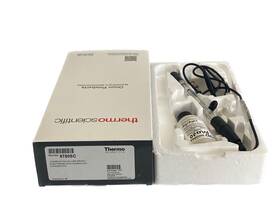
( Brand: Thermo Scientific Orion ), ( Manufacturer Part Number: 9780SC ), ( Part Type: Electrode ), ( Intended Use/discipline: Biological Laboratory, Dental Laboratory, Medical Laboratory, Microbiological Laboratory, Physical Laboratory ), ( Country Of Origin: United States ), ( Unit Type: Unit ), ( Material: Glass, Ceramic Junction, Silver Billet ), ( Additional Search Terms: Surplus Laboratory Bench Supplies Consumables )
Review THERMO SCIENTIFIC ORION Single Junction Glass Bodied Combination Silver Billet Electrode
The **Thermo Scientific Orion 9780SC Single-Junction Glass-Bodied Combination Billet Electrode** is a high-performance, versatile ion-selective electrode designed for precise and reliable measurements in a wide range of analytical applications. Engineered with a robust **glass-bodied construction**, this electrode combines durability with exceptional chemical resistance, making it ideal for demanding laboratory environments where accuracy and longevity are critical. The **single-junction design** ensures minimal interference from co-ions, delivering accurate readings even in complex sample matrices, such as wastewater, environmental samples, or industrial process fluids. Its **combination billet configuration** integrates both the reference and measuring electrodes into a single unit, simplifying setup and reducing the risk of misalignment or contamination a common challenge with separate electrodes. The electrode features a **ceramic junction**, which provides a stable and reproducible reference potential, enhancing measurement consistency over extended periods. Suitable for a broad spectrum of ions, including sodium (Na ), potassium (K ), ammonium (NH ), and other monovalent cations, the 9780SC excels in applications requiring high sensitivity and selectivity. Its **durable glass housing** not only protects internal components from physical damage but also resists corrosion from aggressive chemicals, ensuring extended service life. Additionally, the electrode is equipped with a **screw-on connector**, allowing for easy attachment to compatible meters, while its **low-maintenance design** minimizes downtime for calibration or replacement. Whether used in research laboratories, quality control settings, or field-based environmental monitoring, the Thermo Scientific Orion 9780SC delivers dependable performance, making it an indispensable tool for professionals seeking precision in ion-selective measurements.
The Thermo Scientific Orion 9780SC single-junction glass-bodied combination billet electrode is a widely used pH electrode designed for general laboratory and field applications. Below is a detailed analysis of its pros and cons, followed by a conclusion and recommendation.
---
### **Pros of the Thermo Scientific Orion 9780SC**
1. **Reliability and Durability**
The electrode is built with a glass-bodied design, which is known for its robustness compared to some plastic-bodied alternatives. The glass housing provides better resistance to physical stress, making it suitable for laboratory and field use where it may be exposed to accidental drops or rough handling.
2. **Single-Junction Design**
The single-junction configuration simplifies maintenance and reduces potential interference from other ions in the sample. This design is particularly advantageous in applications where ion selectivity is critical, as it minimizes the risk of contamination from internal reference solutions.
3. **Wide pH Range**
The electrode is designed to measure pH across a broad range (typically 0 14), making it versatile for various applications, including acidic, neutral, and basic solutions. This range is suitable for most routine laboratory tasks.
4. **Combination Design**
As a combination electrode, it integrates both the pH-sensitive glass bulb and the reference electrode into a single unit. This eliminates the need for separate electrodes, simplifying setup, calibration, and maintenance. It also reduces the risk of misalignment or contamination that can occur with dual-electrode systems.
5. **Compatibility with Common Instruments**
The electrode is designed to be compatible with a wide range of pH meters, including those from Thermo Scientific, Orion, and other major manufacturers. This ensures flexibility in laboratory setups where different meters may be used.
6. **Field-Ready Construction**
The billet (solid) glass body is less prone to cracking compared to some fragile glass electrodes. This makes it more durable for fieldwork or environments where the electrode may be exposed to temperature fluctuations or minor impacts.
7. **Low Maintenance Requirements**
Single-junction electrodes generally require less frequent cleaning and refilling of internal reference solutions compared to double-junction electrodes. This can save time and reduce the risk of errors associated with improper maintenance.
8. **Cost-Effective for General Use**
While not the most expensive electrode on the market, it offers a good balance between performance and cost for routine pH measurements. It is often a cost-effective choice for laboratories that do not require specialized or highly sensitive electrodes.
---
### **Cons of the Thermo Scientific Orion 9780SC**
1. **Limited Ion Selectivity**
Like most general-purpose pH electrodes, the Orion 9780SC is not ion-selective beyond pH measurement. If the application involves measuring specific ions (e.g., sodium, potassium, chloride), a dedicated ion-selective electrode (ISE) would be more appropriate. The single-junction design may also be less suitable for samples with high concentrations of interfering ions.
2. **Sensitivity to Mechanical Stress**
While the glass body is more durable than some alternatives, it is not entirely immune to damage. Dropping the electrode or subjecting it to excessive pressure can still lead to cracks or breakage, especially if the glass is already stressed or weakened over time.
3. **Potential for Drift Over Time**
Glass pH electrodes can experience drift in their response over time due to aging of the glass membrane or contamination. Regular calibration and maintenance are necessary to ensure accurate readings, and the electrode may eventually require replacement.
4. **Limited Temperature Range**
The electrode is typically optimized for use within a specific temperature range (often 0 50 C or 32 122 F). Extreme temperatures outside this range can affect its performance, accuracy, or even structural integrity. For high-temperature applications, specialized electrodes would be required.
5. **Potential for Contamination**
The open reference junction in a single-junction electrode can be more susceptible to contamination from the sample, especially in dirty or viscous solutions. This can lead to inaccurate readings or require more frequent cleaning.
6. **Not Ideal for High-Purity or Critical Applications**
For applications requiring ultra-high precision (e.g., pharmaceutical manufacturing, semiconductor processing, or environmental monitoring of trace contaminants), more advanced electrodes (e.g., double-junction or specialized glass compositions) may be necessary to avoid interference from sample ions.
7. **Calibration Dependency**
The accuracy of the electrode relies heavily on proper calibration. If not calibrated regularly or if the calibration buffers are not appropriate for the sample matrix, the readings may be unreliable. This adds an extra layer of responsibility to the user.
8. **Potential for Leakage**
Over time, the reference junction or internal components may degrade, leading to leakage of the internal reference solution. This can corrupt measurements and necessitate replacement of the electrode.
---
### **Conclusion**
The Thermo Scientific Orion 9780SC is a robust, reliable, and cost-effective choice for general pH measurements in laboratory and field settings. Its single-junction design, durability, and ease of use make it suitable for routine applications where high precision is not critical. However, its limitations such as lack of ion selectivity, sensitivity to mechanical stress, and potential for drift mean it may not be ideal for specialized or high-precision applications. Additionally, its maintenance requirements and dependency on proper calibration must be carefully managed to ensure accurate results.
---
### **Recommendation**
- **Buy the Thermo Scientific Orion 9780SC if:**- You require a general-purpose pH electrode for routine laboratory or fieldwork.
- You need a durable, combination electrode that simplifies setup and maintenance.
- Your applications do not involve high-temperature, high-purity, or ion-specific measurements.
- You are working within a budget that balances cost and performance for standard pH monitoring.
- **Consider alternatives if:**- You need ion selectivity beyond pH (e.g., for sodium, chloride, or other ions). In this case, a dedicated ion-selective electrode would be more appropriate.
- Your application involves extreme temperatures, high-pressure environments, or highly corrosive samples. Specialized electrodes (e.g., double-junction, high-temperature, or perfluorinated) may be necessary.
- You require ultra-high precision or trace-level measurements. Advanced electrodes with specialized glass compositions or reference systems may be needed.
- Your budget allows for higher-end electrodes with extended warranties or improved durability (e.g., some models from Metrohm or Hamilton).
For most general laboratory or field applications, the Orion 9780SC is a solid choice. However, always assess your specific requirements and environmental conditions to determine whether this electrode or a more specialized alternative is the best fit for your needs.
Details:
Lab Bench Supplies. GSR veers 1736 GS 9.9.5 1736 Type Combination Electrode. BIOTECH BARGAINS item for sale. Good used condition.
Silver combination construction w/ceramic junction Diameter Metric Body 12mm Internal Reference Ag/Ag Cl length 120mm For Use With Equipment Orion instruments that perform halite determinations.
part #: 9780sc price
- $173.99
specifications tubinglabsupplyu:
- brand: Thermo Scientific Orion
- mpn: 9780sc
- part type: Electrode
- intended use/discipline: Biological Laboratory, Dental Laboratory, Medical Laboratory, Microbiological Laboratory, Physical Laboratory
- country of origin: United States
- unit type: Unit
- material: Glass, Ceramic Junction, Silver Billet
- additional search terms: Surplus Laboratory Bench Supplies Consumables
offer tubinglabsupplyu:
- sold: 0
- options: Ship-to-home
- availability: In Stock
- quantity: 1
- started: May 12, 2026
payments tubinglabsupplyu:
- credit card: Mastercard
- wallet: Paypal
- other
returns tubinglabsupplyu:
- policy: Returns Accepted
- time: 30 Days
- method: Money back
- paid by: Seller
seller tubinglabsupplyu:
- rating: 99.9%
- # reviews: 12045
- city: Bristol, Connecticut
general tubinglabsupplyu:
- condition: Used
- Healthcare, Lab Dental > Medical, Lab Dental Supplies > Other Medical, Lab Dental Supplies
shipping tubinglabsupplyu:
- transit: 3-9 Days
- cost: $0.00
- carrier: FedEx
- class: Standard, Expedited, One-day
- type: Fixed
- service: Standard, FedEx 2Day, FedEx Standard Overnight
Thermo Scientific Orion 9780SC Is Similar To:
- 030538 Thermo Scientific Pack Of (31.5% similar) Please see photos. Pack of 10 - Thermo Scientific ft barb tee 1/1 6 white nylon P/N: new in package...(October 19th, 2017)
- 043275 Thermo Scientific Nut Peek (35.9% similar) Thermo Scientific nut - peek for od tubing, pack of 20 P/N: 043275...(January 22nd, 2018)
- 052306 Dionex Thermo Scientific Tubing (33.1% similar) 01 id, 5FT P/N: Thermo Scientific dines tubing peek...(January 22nd, 2018)
- 052310 Thermo Scientific New Tubing Red Pn (39.4% similar) New Thermo tubing red...(April 27th, 2018)
- 053765 Thermo Scientific Cust Coil (38.8% similar) New condition Thermo Scientific cuts coil assay 5MLMIN, 1000PSI, EG4 part no: free domestic shipping in: 5C70076-10-16...(August 30th, 2017)
- 055637 Thermo Scientific New Pm (33.3% similar) New Thermo pm assembly kit, GP40 IP20,MB,PK pn: see pictures for details make an offer return if not of use...(February 13th, 2018)
- 068115 Thermo Scientific New Static (38.5% similar) Thermo static valve repair kit for arse pn: see pictures details make an offer return if not of use...(February 13th, 2018)
- 068116 Thermo Scientific Static Valve Tool (42.3% similar) Part brand new in original package...(March 1st, 2017)
- 075039 Thermo Scientific New Pm Capillary Pump Kit Assembly Dionex Pn (37.8% similar) New pm capillary pump kit assembly used with dines incs dual single pn: see pictures for details and make an offer. Return if not of use to you...(April 14th, 2018)
- 081309695013 Thermo Scientific New Sir Tubing Id Wall Pn (41.1% similar) Return if not of use. Thermo sir tubing 1,6 x 1,6, 1/2 id 3/3 2 wall pn: 13 see pictures for more detail. Make an offer...(June 30th, 2018)
- 097403a Thermo Scientific Nalgene Sterile Disposable Filter Units (46.3% similar) Upper chamber separates from receiver for easy access to screw cap eliminates ph shift in bottle provide longer life stored fluids receiver is an ideal filtrate storage vessel. Neogene rapid-flow membrane support system provides fast flow and high throughput...(October 21st, 2018)