HEALTH EDCO 79149 Education Death Artery Display
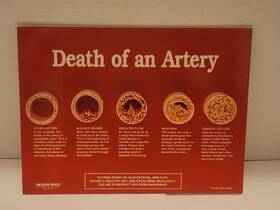
( Brand: Health Edco ), ( Manufacturer Part Number: 79149 ), ( Part Type: Display ), ( Custom Bundle: No ), ( Material: Resin/plastic ), ( Intended Use/discipline: Cardiology, Family Medicine )
Review HEALTH EDCO Education Death Of Artery Display
The **EDCO 79149 Education Death Valley Display** is an engaging and visually dynamic educational tool designed to bring the dramatic landscapes and geological wonders of Death Valley National Park to life in any classroom or learning environment. This high-quality, three-dimensional display captures the stark beauty and scientific significance of this iconic desert region, offering students an immersive way to explore its unique features. The model features a meticulously crafted topographic representation of Death Valley, complete with detailed relief of its iconic landmarks, including Badwater Basin the lowest point in North America and the towering peaks of the Panamint Range. The display also highlights key geological formations such as the Mesquite Flat Sand Dunes, the colorful mineral deposits of Artist s Palette, and the rugged canyons that showcase the park s dramatic erosion patterns. Made from durable, lightweight materials, the display is built to withstand frequent handling and classroom use, ensuring longevity while maintaining its vibrant, realistic appearance. Perfect for geography, earth science, or environmental studies lessons, this model encourages hands-on learning by allowing students to examine the park s topography, understand the processes of desert formation, and appreciate the ecological adaptations of its flora and fauna. Whether used as a standalone educational resource or integrated into a broader unit on extreme environments, the EDCO Death Valley Display serves as both an informative and visually striking addition to any educational setting.
**Pros and Cons of buying a EDCO 79149 Education Death Valley Display**
The **EDCO 79149 Education Death Valley Display** is a classroom model designed to teach students about the anatomy of the human circulatory system, specifically focusing on the arteries. Below is a detailed breakdown of its advantages and disadvantages.
---
### **Pros**
1. **Educational Value**
The model provides a clear, labeled visualization of the major arteries in the human body, including the aorta, carotid, coronary, and other key vessels. This aids in teaching anatomy, physiology, and the circulatory system in a tangible way, making complex concepts more accessible for students.
2. **Durability and Quality**
EDCO products are generally known for their sturdy construction, making this model suitable for repeated classroom use without frequent replacements. The materials appear to be designed to withstand handling by students.
3. **Portability**
The model is likely lightweight and compact, allowing it to be easily moved between classrooms, labs, or educational events. This flexibility is beneficial for schools with multiple teaching locations.
4. **Engagement for Learners**
Hands-on models like this one help students retain information better than traditional textbook illustrations. The tactile nature of the display encourages interaction and discussion, fostering a deeper understanding of the topic.
5. **Visual Clarity**
The model is color-coded and labeled, which helps students differentiate between arteries and other structures. Clear labeling reduces confusion and supports independent study.
6. **Cost-Effective for Classrooms**
While not the cheapest option, it offers long-term value by reducing the need for digital substitutes or repeated purchases of less durable models. It can serve multiple grade levels and classes over time.
7. **Supports Various Teaching Methods**
The model can be used for lectures, group activities, dissections (if paired with other materials), or as a reference during exams. Its versatility makes it a valuable addition to any science curriculum.
---
### **Cons**
1. **Limited Scope**
The model focuses solely on the arteries, omitting veins, capillaries, and other circulatory components. This could leave gaps in a comprehensive lesson on the circulatory system, requiring supplementary materials.
2. **Potential for Misuse**
If not supervised, students might handle the model roughly, leading to wear and tear over time. This could shorten its lifespan if not stored or used carefully.
3. **Space Requirements**
While portable, the model may still occupy shelf or table space in a classroom. Schools with limited storage might find it challenging to accommodate multiple educational models.
4. **Cost**
The upfront cost may be prohibitive for some schools, especially those with tight budgets. However, it is often priced competitively with other high-quality anatomical models.
5. **Maintenance Needs**
Over time, the model may require cleaning or minor repairs to keep it in optimal condition. Schools must allocate resources for upkeep to ensure longevity.
6. **Digital Alternatives**
Some educators prefer digital resources (e.g., interactive simulations or virtual models) for flexibility and updates. While physical models offer tactile learning, they lack the interactivity of digital tools.
7. **Storage Fragility**
If not stored properly (e.g., in a protective case or on a stable surface), the model could be damaged during transport or storage. Schools must implement storage protocols to prevent accidents.
---
### **Conclusion**
The **EDCO 79149 Education Death Valley Display** is a highly effective tool for teaching the anatomy of human arteries in a classroom setting. Its durability, clarity, and engagement potential make it a valuable investment for educators focused on hands-on learning. However, its narrow focus on arteries alone means it should be used alongside other resources to provide a complete picture of the circulatory system. Schools with the budget and space for physical models will find significant benefits in using this display, while those prioritizing digital or broader anatomical coverage may need to supplement it with additional materials.
---
### **Recommendation**
**Purchase the EDCO 79149 if:**- Your curriculum emphasizes hands-on anatomy learning.
- You have the budget and storage space for a durable physical model.
- You plan to use it as part of a broader set of teaching tools (e.g., paired with vein models or digital resources).
- Your students benefit from tactile, visual learning aids.
**Consider alternatives or supplements if:**- You need a model that includes veins or the entire circulatory system.
- Your school prefers digital or interactive learning tools.
- Budget constraints make it difficult to invest in physical models without trade-offs.
For most science classrooms, this model is a worthwhile addition, provided it is used thoughtfully alongside other educational materials.
Details:
12x9 The Health Edco Death of an Artery Display model 79149 is a resin/plastic model designed for educational purposes in the fields cardiology and family medicine. Great condition.
part #: 79149 prices
- $65.00-$75.00
specifications tubinglabsupplyu:
- brand: Health Edco
- mpn: 79149
- part type: Display
- custom bundle: No
- material: Resin/plastic
- intended use/discipline: Cardiology, Family Medicine
seller tubinglabsupplyu:
- # reviews: 31
- rating: 100.0%
- city: Chester, Virginia
returns tubinglabsupplyu:
- method: Money back
- paid by: Buyer
- policy: Returns Accepted
- time: 30 Days
payments tubinglabsupplyu:
- other
- credit card: Mastercard
- wallet: Google-pay
general tubinglabsupplyu:
- condition: Used
- Healthcare, Lab Dental > Medical, Lab Dental Supplies > Other Medical, Lab Dental Supplies
shipping tubinglabsupplyu:
- class: Standard
- type: Calculated
- carrier: USPS
- transit: 4-9 Days
- service: USPS Ground Advantage
- cost: $9.20
offer tubinglabsupplyu:
- best offers: True
- quantity: 1
- availability: In Stock
- started: April 5, 2026
- sold: 0
- options: Ship-to-home
Health Edco 79149 Is Similar To:
- 26038 Health Edco New Masses Of Muscle Model Set Lb And (36% similar) Set comes with a carrying case and an informative, two-sided tent card that highlights the benefits of physical activity. Have anatomical model's to sell or trade. Communication try to respond messages within 24 hours. Exceptions to this include very large difficult package items or orders. Shipping...(February 19th, 2019)
- 26406 Health Edco Tse Model Beige Education (44.4% similar) No other accessories included unless shown in photos or otherwise noted. Contents:comes with unit only as shown in photos. Photos may be of similar items from the same bulk lot. B16 is for internal inventory control only. Have a blessed day: condition: item is gently used...(October 3rd, 2018)
- 79737 Health Edco See For Yourself Prostate Conditions Easel Display Model (46.2% similar) Can't find the anatomical model your looking for. I have many model's for sale, not all are listed at any given time. Comes with protective fleece cover. Schools - educational institutions sell to many colleges and universities. Please inquire if interested. Communication try to respond messages ...(February 19th, 2019)
- W43150 Health Edco Prenatal Care Flip Chart Length Height (35.4% similar) Ideal for teaching the importance of good Health and avoiding hazards nag pregnancy. Feel free to anytime using messaging service. Flip chart features script on reverse panels. This informative flip chart explains the importance of prenatal care and stars fetal development. voltage plugs. The item...(November 11th, 2018)
- Health Edco 53501 Education Shaken Baby Demonstration Model W43117 (52.5% similar) Exceptions to this include very large difficult package items or orders. The model's translucent head allows viewers to see how a baby's brain can be harmed. For descriptive purposes I use lots of high resolution photos and try to capture enough detail show you the entire model any marks or ...(February 13th, 2024)
- Health Edco He-26017 1lb Of Fat Glob Education Model Personal Trainer (48% similar) Excellent condition. The model is designed to help individuals understand the impact of excess body fat on their Health and well-being. Still extremely moist. This is a Health Edco educational model of 1LB glob fat made resin/plastic...(April 19th, 2024)
- Health Edco 79173 Education Fat Facts Snack Foods Test Tubes With Case (51.6% similar) No instructions/ handout included. Health Edco education - 79173 fat facts: snack foods test tubes w/ case. This is in good condition with the test tube holder, tubes and case all tact...(April 23rd, 2024)
- Health Edco 79700 Education Cervical Effacement And Dilation Model (62.9% similar) Schools - educational institutions I sell to many colleges and universities. In this 3-D display, 10 lifelike model's of the cervix represent dilation from 1 cm. Please inquire if interested. Includes English with Spanish subtitles. For descriptive purposes I use lots of high resolution photos and ...(January 4th, 2025)
- Health Edco 95824 Muscle Model Replica Anatomy Weight Loss 5 Lb (43% similar) The model is a valuable tool for explaining concepts related to muscle function and weight management in clear visual manner. Made of durable resin and plastic materials, this 5 lb model is designed for medical Health education purposes...(June 16th, 2025)
- Health Edco 26406e Education Tse Model Two Lumps In One Testicle With Case Cancer (46.7% similar) With this detailed and realistic model, users can gain a better understanding of the abnormalities that occur in human body. The Health Edco education Ste model two lumps in one testicle is a resin/plastic medical model designed for family medicine education. The powder still has plastic around it ...(June 28th, 2025)
- Health Edco 84080 Fractured Hip Femur Bone Education Anatomical Model (43.2% similar) Shipping most items are shipped via us postal service priority mail. Some items are shipped via FedEx. Please inquire if interested. For descriptive purposes I use lots of high resolution photos and try to capture enough detail show you the entire model any marks or imperfections that it may have. ...(September 20th, 2025)