BRAINMASTER 381-003 Atlantis Channel Cable Eeg Atlantis/discovery 120
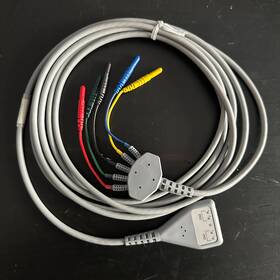
( Brand: Brainmaster ), ( Manufacturer Part Number: 381-003 ), ( Part Type: Cable ), ( Country Of Origin: United States )
Review BRAINMASTER Technologies Atlantis/discovery Channel Cable Eeg 120
The **BrainMaster 381-003 Atlantis/Discovery Channel Cable (120-pin EEG)** is a high-performance, industry-standard interface designed to facilitate seamless connectivity between advanced electroencephalography (EEG) systems and professional recording devices. Engineered with precision for clinical, research, and educational applications, this cable is specifically tailored to accommodate the **Atlantis** and **Discovery** series of BrainMaster EEG systems, ensuring optimal signal integrity and reliability during prolonged monitoring sessions. Constructed from durable, medical-grade materials, the cable features a robust **120-pin connector system**, which minimizes signal interference and maximizes data accuracy critical for capturing subtle neural activity with clarity. Its flexible yet reinforced design allows for easy maneuverability in clinical settings, reducing the risk of tangling or damage during use, while the high-quality shielding prevents electromagnetic noise from compromising the fidelity of recorded brainwave patterns. Whether deployed in a hospital, research laboratory, or educational institution, this cable serves as an essential link between the BrainMaster EEG headset and recording equipment, enabling healthcare professionals and researchers to obtain precise, high-resolution EEG data for diagnostic, therapeutic, or experimental purposes. Its compatibility with leading EEG software platforms further enhances its versatility, making it an indispensable tool for professionals seeking to advance neurological studies or improve patient care through accurate brain activity analysis.
The BrainMaster 381-003 (Atlantis/Discovery Channel Cable EEG 120) is a portable, 128-channel EEG system designed for high-density electroencephalography recordings, often used in research, clinical diagnostics, and advanced neuroimaging studies. Below is a detailed breakdown of its pros and cons, followed by a conclusion and recommendation.
---
### **Pros of the BrainMaster 381-003**
1. **High Channel Density (128 Channels)**
The system supports 128 active channels, which is significantly higher than traditional 16- or 32-channel EEG systems. This allows for higher spatial resolution in brain mapping, enabling more precise localization of neural activity. High-density EEG is particularly useful for studies involving epilepsy, brain-computer interfaces (BCIs), cognitive neuroscience, and advanced clinical diagnostics.
2. **Portability and Mobility**
The system is designed to be portable, making it suitable for use in clinical settings, research labs, or even mobile EEG units. This flexibility is advantageous for studies requiring recordings outside traditional lab environments, such as in-home or ambulatory settings.
3. **Compatibility with Atlantis and Discovery Channels**
The system supports both the Atlantis (128-channel) and Discovery (128-channel) channel configurations, which are high-density electrode systems. These configurations are optimized for high-resolution EEG recordings, reducing artifacts and improving signal quality. The Atlantis system, in particular, is known for its high-density, low-impedance electrodes, which enhance signal clarity.
4. **Advanced Signal Processing and Artifact Reduction**
BrainMaster systems are equipped with sophisticated signal processing algorithms, including independent component analysis (ICA) and advanced filtering techniques. These tools help reduce common artifacts such as eye blinks, muscle activity, and environmental noise, leading to cleaner EEG data. This is critical for accurate interpretation in both clinical and research settings.
5. **User-Friendly Software**
The accompanying software is designed to be intuitive, with features for real-time monitoring, offline analysis, and automated artifact rejection. This reduces the learning curve for users and speeds up the data processing workflow. The system also supports customizable analysis pipelines, allowing researchers to tailor the software to their specific needs.
6. **Versatility for Research and Clinical Use**
The system is versatile and can be used for a wide range of applications, including:- Epilepsy monitoring and seizure detection.
- Cognitive neuroscience studies (e.g., attention, memory, language processing).
- Brain-computer interface (BCI) research.
- Sleep studies and polysomnography.
- Neurofeedback and clinical diagnostics.
This versatility makes it a valuable investment for institutions with diverse research or clinical needs.
7. **Integration with Other Modalities**
The BrainMaster system can be integrated with other neuroimaging or physiological recording modalities, such as fNIRS, ECG, or EOG. This multi-modal approach enhances the depth of data collected and can provide more comprehensive insights into brain function.
8. **Support for Ambulatory and Long-Duration Recordings**
The portability and durability of the system make it suitable for long-duration or ambulatory EEG recordings. This is particularly useful for capturing rare or transient events, such as nocturnal seizures or sleep-related phenomena, which may not be observable in a controlled lab setting.
9. **Global Support and Training**
BrainMaster offers international support, training programs, and technical assistance. This can be particularly beneficial for institutions or researchers who may require ongoing maintenance, troubleshooting, or software updates.
10. **Cost-Effective for High-Density EEG**
While high-density EEG systems can be expensive, the BrainMaster 381-003 offers a relatively cost-effective solution compared to some of its competitors (e.g., high-end systems from NeuroScan or g.tec). The balance between performance and price makes it an attractive option for researchers and clinicians on a budget.
---
### **Cons of the BrainMaster 381-003**
1. **High Initial Cost**
Despite being relatively cost-effective for high-density EEG systems, the BrainMaster 381-003 still represents a significant financial investment. The cost includes not only the hardware but also the software, electrodes, and accessories. Institutions with limited budgets may need to carefully evaluate whether the system s capabilities justify the expenditure.
2. **Maintenance and Upkeep**
High-density EEG systems require regular maintenance to ensure optimal performance. This includes cleaning electrodes, checking cables, and updating software. Institutions may need to allocate resources for technical support, calibration, and potential repairs, which can add to the long-term cost of ownership.
3. **Learning Curve for Advanced Features**
While the software is user-friendly, mastering advanced features such as custom analysis pipelines, artifact rejection algorithms, or integration with other modalities may require training. Researchers or clinicians new to high-density EEG may need to invest time in learning the system s capabilities, which could temporarily slow down productivity.
4. **Space and Infrastructure Requirements**
The system requires a dedicated space for setup, including storage for electrodes, cables, and accessories. Additionally, the software may require a powerful computer to run smoothly, especially for real-time processing or large datasets. Institutions may need to invest in upgrading their IT infrastructure to support the system.
5. **Limited Customization for Specific Applications**
While the system is versatile, it may not offer the same level of customization as some niche or specialized EEG systems. For example, researchers focused on very specific applications (e.g., ultra-high-density EEG for microstates or advanced BCI protocols) might find that the BrainMaster system lacks certain proprietary features offered by competitors.
6. **Dependency on Software Updates**
EEG systems rely heavily on software for data acquisition, processing, and analysis. Dependency on software updates can sometimes introduce compatibility issues or require users to adapt to new interfaces. Institutions should ensure they have the resources to handle such transitions smoothly.
7. **Artifact Sensitivity in Noisy Environments**
Although the system includes advanced artifact reduction tools, recordings in highly noisy environments (e.g., clinical settings with electrical interference or research labs with significant background noise) may still suffer from signal degradation. Users may need to invest in additional shielding or noise-reduction techniques to mitigate this issue.
8. **Limited Battery Life for Portable Use**
While the system is portable, its battery life may be limited for extended recordings. Users may need to carry spare batteries or ensure access to power outlets during long sessions, which can be cumbersome in certain settings.
9. **Competition from Other High-Density EEG Systems**
The market for high-density EEG systems includes competitors such as g.tec (g.USBamp), NeuroScan (Quick-32 or high-density systems), and EGI (Electrical Geodesics, Inc.). Each of these systems has its own strengths and weaknesses, and institutions should compare features, pricing, and support to determine the best fit for their needs.
10. **Potential for Overkill for Basic Applications**
For institutions or researchers primarily engaged in low-density EEG (e.g., 16- or 32-channel clinical diagnostics), the 128-channel system may offer more capabilities than necessary. In such cases, the investment might not be justified, and a lower-channel system could suffice.
---
### **Conclusion**
The BrainMaster 381-003 (Atlantis/Discovery Channel Cable EEG 120) is a powerful and versatile high-density EEG system that excels in applications requiring precise brain mapping, advanced signal processing, and portability. Its 128-channel configuration, compatibility with high-density electrode systems, and robust software make it a strong choice for research institutions, clinical settings, and advanced neuroimaging studies. The system s ability to reduce artifacts, integrate with other modalities, and support long-duration recordings further enhances its utility.
However, the system s high initial cost, maintenance requirements, and potential learning curve for advanced features should be carefully considered. Institutions must also evaluate whether the system s capabilities align with their specific needs, as overkill for basic applications or limited budgets could make it less ideal. Additionally, the dependency on software updates and the need for a dedicated workspace or IT infrastructure are practical considerations that should not be overlooked.
---
### **Recommendation**
The BrainMaster 381-003 is **highly recommended** for the following groups:1. **Research Institutions** conducting high-density EEG studies in cognitive neuroscience, epilepsy research, or brain-computer interfaces. Its advanced signal processing and high channel density make it well-suited for cutting-edge research.
2. **Clinical Centers** specializing in epilepsy monitoring, neurodiagnostics, or advanced sleep studies. The system s portability and artifact reduction capabilities enhance diagnostic accuracy.
3. **Universities or Labs** with diverse research interests requiring a flexible, high-resolution EEG system. The versatility of the system allows it to adapt to various applications without requiring multiple devices.
4. **Institutions with Existing BrainMaster Infrastructure** that may already have compatible software, training programs, or technical support in place.
**Considerations Before Purchase:**- **Budget:** Ensure that the system fits within your financial constraints, including long-term maintenance and software updates.
- **Space and IT Requirements:** Verify that your lab has the space and IT infrastructure to support the system effectively.
- **User Expertise:** Assess whether your team has the expertise to operate the system or if additional training will be required.
- **Alternative Systems:** Compare the BrainMaster system with competitors like g.tec or NeuroScan to determine which best fits your specific research or clinical needs.
For institutions prioritizing high-density EEG with a balance of portability, signal quality, and versatility, the BrainMaster 381-003 is a robust and reliable choice. However, those with simpler needs or
Details:
Used in the Atlantis I/II and Discovery EEG systems. Atlantis/Discovery 2 Channel Cable. Athletic Wear, Swimwear, Accessories.
part #: 381003 price
- $89.99
specifications tubinglabsupplyu:
- brand: Brainmaster
- mpn: 381-003
- part type: Cable
- country of origin: United States
payments tubinglabsupplyu:
- credit card: Visa
- wallet: Paypal
- other
shipping tubinglabsupplyu:
- carrier: USPS
- cost: $0.00
- service: USPS Ground Advantage
- transit: 4-8 Days
- type: Calculated
- class: Standard
general tubinglabsupplyu:
- Healthcare, Lab Dental > Medical, Lab Dental Supplies > Other Medical, Lab Dental Supplies
- condition: Used
returns tubinglabsupplyu:
- policy: No Returns
offer tubinglabsupplyu:
- sold: 0
- availability: In Stock
- best offers: True
- options: Ship-to-home
- started: March 30, 2026
- quantity: 1
seller tubinglabsupplyu:
- city: Washington, District Of Columbia
- # reviews: 814
- rating: 100.0%