SPEX 1690T Sampleprep Minig Homogenizer Titer Nesting Plate 04500-15
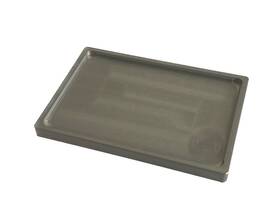
( Brand: Spex ), ( Manufacturer Part Number: 1690T ), ( Part Type: Homogenizer Plate ), ( Intended Use/discipline: Biological Laboratory, Dental Laboratory, Medical Laboratory, Microbiological Laboratory, Physical Laboratory ), ( Country Of Origin: United States ), ( Unit Type: Unit ), ( Material: Aluminum ), ( Volume: Fits Standard Well Plate Or Titer Plate ), ( Additional Search Terms: Surplus Laboratory Bench Supplies Consumables )
Review SPEX Used Sampleprep Minig Homogenizer Titer Nesting Plate
The **SPEX SamplePrep MiniG Homogenizer with Titer Nesting Plate (Model 04500-15)** is a high-performance, compact yet powerful laboratory instrument designed to efficiently process small to medium-sized biological and chemical samples with precision and reliability. Engineered for versatility, this bench-top homogenizer combines robust engineering with user-friendly operation, making it an indispensable tool for researchers in fields such as molecular biology, virology, microbiology, and pharmaceutical development. Its **MiniG** platform delivers consistent, high-speed homogenization at speeds ranging up to **20,000 RPM**, ensuring thorough disruption of cell walls, tissues, or microbial cultures while minimizing sample loss and contamination. The **titer nesting plate (04500-15)** included with this model is a specialized accessory featuring **15 deep-well, conical microcentrifuge tube holders**, each securely fastened to prevent shifting during homogenization. This design allows for parallel processing of multiple samples simultaneously, optimizing workflow efficiency without compromising on homogenization quality. The nested tubes are engineered to fit standard **1.5 mL to 2 mL microcentrifuge tubes**, accommodating a wide range of sample volumes while maintaining stability during the high-impact homogenization process. The instrument s **closed-system operation** reduces aerosolization and cross-contamination risks, a critical feature for handling pathogens, infectious agents, or hazardous materials. Additionally, the **adjustable speed control** and **precise timing function** enable users to customize homogenization parameters to match the specific requirements of their samples, whether for DNA/RNA extraction, protein lysis, or cell lysis applications. The **durable stainless steel rotor and pre-chilled homogenization tips** ensure longevity and maintain sample integrity, particularly for temperature-sensitive biomolecules. With its **compact footprint** and **plug-and-play design**, the SPEX MiniG Homogenizer with titer nesting plate seamlessly integrates into any laboratory setting, offering a balance of power, convenience, and safety for both routine and high-throughput sample preparation tasks. Whether used in academic research, clinical diagnostics, or industrial bioprocessing, this instrument provides a reliable solution for achieving reproducible and efficient homogenization results.
### **Pros and Cons of buying a SPEX SamplePrep MiniG Homogenizer (Model 1690T) with Titer Nesting Plate (04500-15)**
#### **Pros**
1. **High Performance for Tissue and Cell Homogenization**
The MiniG is designed for efficient disruption of tough biological samples, including tissues, cells, and bacteria. Its high-speed rotor and impact grinding technology ensure thorough homogenization, which is critical for DNA/RNA extraction, protein isolation, and other molecular biology applications.
2. **Compact and Bench-Top Design**
The MiniG is a portable, desktop unit, making it ideal for laboratories with limited space. Its compact size allows for easy integration into existing workflows without requiring dedicated bench space.
3. **Versatile Applications**
Beyond homogenization, the MiniG can be used for bead beating, cell lysis, and even small-scale grinding of plant or animal tissues. The inclusion of the **Titer Nesting Plate (04500-15)** allows for parallel processing of multiple samples, improving throughput in high-volume settings like clinical diagnostics or research labs.
4. **Durable and Reliable Construction**
SPEX SamplePrep is known for building robust equipment. The MiniG features a sturdy motor, reinforced housing, and high-quality grinding elements that withstand repeated use, reducing long-term maintenance costs.
5. **Easy to Clean and Maintain**
The unit is designed for quick disassembly, allowing for easy cleaning between experiments. The nesting plate (04500-15) is likely made of durable, non-reactive materials, minimizing contamination risks.
6. **Compatibility with Common Sample Tubes**
The MiniG works with standard 1.5 mL to 2 mL microcentrifuge tubes, as well as specialized homogenization tubes (often included or sold separately). This flexibility makes it adaptable to various sample types.
7. **Good for Small to Medium Workloads**
If your lab processes fewer than 20 30 samples daily, the MiniG provides an efficient alternative to larger, more expensive homogenizers like the Freezer/Mill or Bead Ruptor.
8. **Positive User Reviews for Consistency**
Many researchers report reliable performance in homogenizing difficult samples (e.g., plant tissues, bacteria) where other methods (like manual grinding or vortexing) fail.
---
#### **Cons**
1. **Limited Throughput for Large-Scale Operations**
The MiniG is not suitable for high-throughput applications (e.g., processing hundreds of samples per day). Larger homogenizers (e.g., SPEX Freezer/Mill, Retsch MM 400) or automated systems would be more efficient in industrial or large research settings.
2. **Noise and Vibration**
Like most high-speed homogenizers, the MiniG can be loud and generate significant vibration. This may require placement in a dedicated area or the use of sound-dampening materials.
3. **Higher Cost per Sample for Low-Volume Use**
While the MiniG is affordable for its size, if you only need to homogenize a few samples occasionally, a manual method (e.g., mortar and pestle, vortexing with beads) might be more cost-effective.
4. **Bead Consumption and Waste**
The MiniG relies on ceramic or glass beads for homogenization, which wear out over time and must be replaced. This adds to long-term operational costs, especially if used frequently.
5. **Learning Curve for Optimal Settings**
Achieving consistent results requires experimentation with speed, time, and bead type. Inexperienced users may need to troubleshoot parameters before obtaining reproducible data.
6. **Not Ideal for Very Large or Fibrous Samples**
While effective for most biological tissues, extremely large or fibrous samples (e.g., whole small animals, dense plant stems) may require pre-processing or a different homogenizer.
7. **Limited Accessories Beyond the Titer Plate**
The MiniG s accessory ecosystem is smaller compared to larger SPEX models. If you need specialized adapters (e.g., for cryogenic grinding), you may need to purchase additional parts.
8. **Potential for Overheating with Prolonged Use**
Continuous operation at maximum speed can cause the motor to overheat. The unit may require cooling periods between runs, which can slow down workflows.
---
### **Conclusion**
The **SPEX SamplePrep MiniG Homogenizer (1690T) with Titer Nesting Plate (04500-15)** is a **strong choice for small to medium laboratories** requiring reliable, high-speed homogenization of biological samples. Its compact design, versatility, and efficiency in breaking down tough tissues make it ideal for molecular biology, clinical diagnostics, and research applications where manual methods fall short.
However, it is **not suitable for high-throughput or industrial-scale operations**, and its noise, bead consumption, and learning curve may be drawbacks for some users. If your workflow involves **fewer than 20 30 samples daily** and you prioritize **consistency and ease of use**, the MiniG is a worthwhile investment. For larger-scale needs, consider upgrading to a **Freezer/Mill or automated system**.
---
### **Recommendation**
**Buy the SPEX MiniG Homogenizer (1690T) with the Titer Nesting Plate (04500-15) if:**- You work in a **small lab** (e.g., academic research, clinical diagnostics, or biotech startups).
- You frequently homogenize **tissues, cells, or bacteria** where manual methods are insufficient.
- You need **parallel processing** of multiple samples (thanks to the nesting plate).
- You have **limited space** and require a **bench-top solution**.
**Avoid it if:**- You process **hundreds of samples daily** (opt for a larger homogenizer instead).
- Your budget is tight and you only need **occasional homogenization** (manual methods may suffice).
- You require **cryogenic grinding** or **industrial-scale processing** (other SPEX models are better suited).
**Alternative Considerations:**- **For lower budgets:** A **manual homogenizer (e.g., Dounce or Potter-Elvehjem)** or **vortex with beads** may work for softer samples.
- **For higher throughput:** Upgrade to the **SPEX Freezer/Mill** or **Retsch MM 400**.
- **For cryogenic needs:** The **SPEX SamplePrep Freezer/Mill 6870** is better for low-temperature homogenization.
Overall, the MiniG is a **practical, mid-range homogenizer** that delivers strong performance for its price point, making it a **recommended purchase for the right applications**.
Details:
GSR veers 1736 GS 9.9.5 1736 Can be used with SamplePrep HG-400 MiniG Homogenizer. Thorough cleaning and sterilization are recommended before use. Good used condition. BIOTECH BARGAINS item for sale.
Lab Bench Supplies. Used items will show signs of wear sometimes including light scratches, discoloration, stickers/tape, or exterior markings.
part #: 1690t prices
- $39.99-$42.35
specifications tubinglabsupplyu:
- brand: Spex
- mpn: 1690t
- part type: Homogenizer Plate
- intended use/discipline: Biological Laboratory, Dental Laboratory, Medical Laboratory, Microbiological Laboratory, Physical Laboratory
- country of origin: United States
- unit type: Unit
- material: Aluminum
- volume: Fits Standard Well Plate Or Titer Plate
- additional search terms: Surplus Laboratory Bench Supplies Consumables
returns tubinglabsupplyu:
- paid by: Seller
- policy: Returns Accepted
- method: Money back
- time: 30 Days
seller tubinglabsupplyu:
- # reviews: 12241
- city: Bristol, Connecticut
- rating: 99.9%
offer tubinglabsupplyu:
- quantity: 1
- sold: 0
- options: Ship-to-home
- started: June 1, 2026
- availability: In Stock
shipping tubinglabsupplyu:
- transit: 3-7 Days
- carrier: FedEx
- service: Standard, FedEx 2Day, FedEx Standard Overnight
- cost: $0.00
- type: Fixed
- class: Standard, Expedited, One-day
general tubinglabsupplyu:
- condition: Used
- Healthcare, Lab Dental > Medical, Lab Dental Supplies > Other Medical, Lab Dental Supplies
payments tubinglabsupplyu:
- credit card: Discover
- wallet: Apple-pay
- other