PARKER SCILOG 080-697PSX-3P-5 Scipres Biopharm Pressure Tc Sensors 3PT
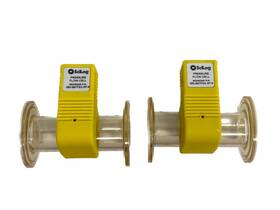
( Brand: Parker Scilog ), ( Manufacturer Part Number: 080-697PSX-3P-5 ), ( Part Type: Pressure Sensor ), ( Intended Use/discipline: Biological Laboratory, Dental Laboratory, Medical Laboratory, Microbiological Laboratory, Physical Laboratory ), ( Country Of Origin: United States ), ( Unit Type: Unit ), ( Material: Medical Grade Polysulfone ), ( Additional Search Terms: Surplus Laboratory Bench Supplies Consumables )
Review PARKER SCILOG Used Scipres Biopharm Pressure Sensors Inch Tc 3pt
The **Parker Scilog 080-697PSX-3P-5 SciPres Biopharm Pressure Sensor** is a high-performance, precision-engineered solution designed specifically for demanding biopharmaceutical and pharmaceutical applications where reliability, accuracy, and compliance with stringent industry standards are non-negotiable. This advanced pressure sensor belongs to Parker Hannifin s **SciPres** series, a line of instruments meticulously developed to meet the rigorous requirements of cleanroom environments, aseptic processing, and sterile manufacturing particularly in the production of biologics, vaccines, and other high-value pharmaceuticals. Built with a **3-point (3P) connection** for robust sealing and easy integration, this sensor features a **5-inch (127 mm) cable length**, providing flexibility in installation while maintaining a clean, contamination-free interface. The **080 series** designation indicates a compact yet durable design, optimized for applications where space is limited but performance cannot be compromised.
At its core, the **080-697PSX-3P-5** operates on a **piezoresistive silicon sensing element**, delivering exceptional linearity, repeatability, and long-term stability critical attributes for processes where even minor deviations in pressure can impact product yield or quality. The sensor is **IP65-rated**, ensuring protection against dust, dirt, and low-pressure water jets, making it suitable for both cleanroom and semi-controlled environments. Its **stainless steel housing (316L grade)** resists corrosion, chemical exposure, and thermal cycling, while the **PVDF (polyvinylidene fluoride) or PTFE-coated** components further enhance biocompatibility and resistance to aggressive cleaning agents like peracetic acid, hydrogen peroxide, or ethanol commonly used in CIP (Clean-In-Place) and SIP (Sterilize-In-Place) protocols. The **5-bar (0 to 500 kPa) measurement range** is ideal for monitoring low to moderate pressure applications, such as filtration, filling systems, or bioreactor operations, where precise control is essential for maintaining sterile conditions and process consistency.
One of the standout features of this sensor is its **compliance with industry-leading standards**, including **3-A Sanitary Standards, EHEDG (European Hygienic Engineering & Design Group), and FDA 21 CFR Part 11** requirements, ensuring seamless integration into pharmaceutical-grade systems. The **SciPres Biopharm series** is also designed to minimize dead legs and crevices, reducing the risk of biofilm formation and microbial contamination a critical consideration in bioprocessing where even trace levels of contamination can lead to product spoilage or regulatory non-compliance. The sensor s **signal output** is configurable for **4-20 mA or 0-10 VDC**, providing compatibility with most PLCs, DCS (Distributed Control Systems), and SCADA platforms, while its **HART communication protocol** enables advanced diagnostics, calibration tracking, and predictive maintenance features that enhance operational efficiency and reduce downtime.
For applications requiring **aseptic monitoring**, the sensor s **sterilizable design** allows for validation via steam or chemical sterilization, ensuring that it can be fully integrated into a closed-loop system without compromising sterility. The **3-point connection** not only simplifies installation but also facilitates easy disassembly for cleaning or replacement, adhering to the principles of **Design for Six Sigma (DFSS)** and **Risk Assessment (HAZOP)** methodologies commonly used in pharmaceutical engineering. Additionally, the sensor s **low hysteresis and temperature compensation** ensure accurate readings across a wide operational temperature range (-20 C to 100 C), making it suitable for both ambient and slightly elevated-temperature applications. Whether deployed in **fill-finish operations, membrane filtration systems, or bioreactor pressure control**, the **Parker Scilog 080-697PSX-3P-5** delivers the precision, durability, and hygiene compliance required to meet the highest standards of pharmaceutical manufacturing.
### **Pros and Cons of buying a Parker Scilog 080-697PSX-3P-5 (SCIPRES Biopharm Pressure Sensor, TC 3-Port)**
#### **Pros:**1. **High Precision and Reliability** The sensor is designed for biopharmaceutical applications, where accurate pressure measurement is critical. It likely meets stringent industry standards for cleanliness, durability, and repeatability.
2. **Compatibility with Biopharm Processes** The **SCIPRES Biopharm** series is specifically engineered for pharmaceutical and biotech environments, ensuring compatibility with sterile, single-use, or closed-loop systems.
3. **Three-Port Design (TC 3P)** The three-port configuration allows for flexible installation, enabling monitoring of pressure in complex systems where multiple connections may be required.
4. **Potential for Easy Integration** Designed for seamless integration with automated bioprocessing systems, reducing manual intervention and improving workflow efficiency.
5. **Durability and Long-Term Performance** Parker s industrial reputation suggests this sensor may have a robust build, resistant to corrosion, temperature fluctuations, and chemical exposure common in biopharm settings.
6. **Support for Clean-in-Place (CIP) and Sterilization** If the sensor is compatible with CIP/SIP protocols, it reduces downtime and maintenance costs in pharmaceutical manufacturing.
7. **Potential for Data Logging and Automation** Modern biopharm sensors often support digital outputs (e.g., 4-20mA, HART, or Modbus), enabling real-time monitoring and integration with SCADA systems.
#### **Cons:**1. **High Cost** Industrial-grade pressure sensors, especially those designed for biopharmaceutical use, tend to be expensive compared to generic or lower-end alternatives.
2. **Limited Off-the-Shelf Availability** Specialized sensors may require longer lead times or ordering through authorized distributors, which could delay projects.
3. **Maintenance and Calibration Requirements** High-precision sensors may need periodic calibration to maintain accuracy, adding to operational costs.
4. **Potential for Overkill for Small-Scale Use** If the sensor is being purchased for a small-scale or non-critical application, its advanced features may not be fully utilized, making it a less cost-effective choice.
5. **Compatibility Issues** If the sensor s output signals (e.g., analog vs. digital) do not align with existing systems, additional interfaces or converters may be needed.
6. **Single-Use vs. Reusable Trade-offs** Some biopharm applications may prefer disposable sensors to avoid cross-contamination, but this sensor appears reusable, which could complicate sterilization procedures.
7. **Vendor Lock-In Risk** Relying on a specific brand (Parker) may limit flexibility if future upgrades or replacements require alternative suppliers.
---
### **Conclusion**
The **Parker Scilog 080-697PSX-3P-5** is a high-quality, specialized pressure sensor well-suited for **biopharmaceutical, pharmaceutical, or cleanroom applications** where precision, reliability, and compatibility with sterile processes are critical. Its three-port design and industrial-grade construction make it a strong choice for automated or complex systems. However, its **higher cost, potential lead times, and maintenance needs** may not justify its purchase for less demanding applications.
If your application requires **sterile monitoring, long-term stability, or integration with bioprocessing systems**, this sensor is a **recommended investment**. However, if budget constraints or simpler requirements exist, evaluating alternatives (e.g., lower-cost generic sensors or single-use options) may be more practical.
### **Recommendation:**- **Buy if:** You need a **durable, precision pressure sensor for biopharmaceutical or pharmaceutical applications** where accuracy, cleanliness, and automation are priorities.
- **Consider alternatives if:** Your application is **low-volume, non-critical, or budget-sensitive**, as cheaper or simpler sensors may suffice.
- **Verify compatibility** with your existing systems (signal types, mounting, and sterilization protocols) before purchase.
- **Check Parker s support network** for calibration, maintenance, and spare parts availability to ensure long-term reliability.
Details:
BIOTECH BARGAINS item for sale. Application: Pressure Sensing. No certificate. GSR veers 1730 GS 9.9.4 1730 Tube Size Range: Tubing with 1 TC Laddish.
Lot of 2 used sensors. Calibration: 0.3 psi, to 30 range accuracy values define the maximum expected, 3-pt.
part #: 080697psx3p5 prices
- $29.99-$209.99
specifications tubinglabsupplyu:
- brand: Parker Scilog
- mpn: 080-697psx-3p-5
- part type: Pressure Sensor
- intended use/discipline: Biological Laboratory, Dental Laboratory, Medical Laboratory, Microbiological Laboratory, Physical Laboratory
- country of origin: United States
- unit type: Unit
- material: Medical Grade Polysulfone
- additional search terms: Surplus Laboratory Bench Supplies Consumables
seller tubinglabsupplyu:
- rating: 99.8%
- city: Bristol, Connecticut
- # reviews: 11189
general tubinglabsupplyu:
- Healthcare, Lab Dental > Medical, Lab Dental Supplies > Other Medical, Lab Dental Supplies
- condition: Used
returns tubinglabsupplyu:
- method: Money back
- time: 30 Days
- policy: Returns Accepted
- paid by: Seller
offer tubinglabsupplyu:
- quantity: 1
- started: February 12, 2026
- availability: In Stock
- sold: 0
- options: Ship-to-home
payments tubinglabsupplyu:
- other
- wallet: Google-pay
- credit card: Visa
shipping tubinglabsupplyu:
- cost: $0.00
- transit: 5-8 Days
- type: Fixed
- class: Standard, Expedited, One-day
- service: Standard, FedEx 2Day, FedEx Standard Overnight
- carrier: FedEx
Parker Scilog 080-697PSX-3P-5 Is Similar To:
- 004-0338-900 Omega Px302-100gv Pressure Sensor Parker (35% similar) Omega PX302-100GV pressure sensor, Parker VAC-100 pig valve block assembly listing details condition: used, good cosmetic condition with normal scuffs wear. Testing performed: none, pulled from a working environment. Please through message for return...(February 28th, 2017)
- 3121bsn1ee00n0mc11c2 Omega Px302-100gv Pressure Transducer Parker Valve (27.1% similar) Omega PX302 100GV pressure transducer, Parker 3121BSN1EE00N0MC11C2 valve block assembly listing details condition used, good cosmetic condition with normal scuffs wear. Testing performed none, pulled from a working environment. Please through message for return...(December 1st, 2016)
- 4z A b6lj2-ssp Parker Stainless Steel Ball Valve Cpi Lot Of Used (22.8% similar) Parker 4z a -B6LJ2-SSP stainless steel ball VALVE1 4 CPI fittings lot of...(June 14th, 2018)
- 6msel12n-316 Parker Alok Used Stainless (32.5% similar) Parker a-Loki used stainless steel male elbow connector 3/8 in x 4 Mont 6MSEL12N-316...(September 30th, 2017)
- 72218bn4un00a0jz04c1 Parker Valve Used (21.3% similar) Parker 72218BN4UN00A0JZ04C1 valve 12VDC 22W 0-40PSI 0-275KPA used this item is and in working condition...(March 27th, 2018)
- Cl9900 Autoclave Engineers Parker 6 000 Psi High Pressure Elbow Fitting 9 16 (36.3% similar) 29MM 316L stainless steel new excellent working and cosmetic condition. Autoclave engineers Parker CL9900 ht A15683 6,000 psi high pressure elbow fitting outside tube diameter inch 14...(January 22nd, 2016)
- Fm-4-11661212-05g Parker Uhp Flowmeter Inch Series High Purity Pvdf Pfa Ptfe (26.3% similar) Parker FM-4 series pf, PDF, poly pro, PDF body flow meter specs:pressure range: pig to 120 bar max ambient temp: 212 degrees Fahrenheit gallons per minute: 5MIN...(April 12th, 2018)
- In Inch Nptf Mnpt Nptm Mpt Mip Mp M Thread 0.50 Swagelok Parker 1-2 X Npt (16.6% similar) May have a little shelf wear. ATM A-276 and A-479 bar stock, A-182 forgings male not max. If you see duplicate shipping charges, do not pay. Psi ratings ANSI same b 31. MIL-P-7105B. S: . Other alternatives are available such as an anaerobic thread sealant with PDF. PDF tape, if not applied properly...(February 28th, 2017)
- 316tj89 Parker Log Of 6 1 2 Inch Tube Unions (32.8% similar) New other, most were stored on shelves not in packages but unused, complete fittings, got from contractor who owed me money, have many others, just want to move it and get some of my money back. Have 1/4 and 3/8 also. Shipping 5 bonus gets you a free 1/2 tube union...(May 12th, 2016)
- Parker 14r013fc Pneumatic Pressure Regulator With A Filter And Connected Air (35% similar) Warranty: none as is. The Parker 14R013FC is a pneumatic pressure regulator with filter designed for medical, lab, and dental applications. It is a normal and legal requirement...(February 20th, 2025)
- Parker Scilog 080-696psx-3p-5 Used 3 Scipres Biopharm Pressure Sensors 3 4 Inch 3pt (93.4% similar) Multiple quantity available. No certificate. GSR veers 1730 gs 9.9.4 1730 lot of 3 used sensors. Calibration: 0.3 psi, to 30 range accuracy values define the maximum expected, 3-PT. Biotech bargains item for sale. Application: pressure sensing...(February 12th, 2026)